
Netanyahu tells cabinet the two things Trump promised for ‘deal’

By NEWSRAEL Telling the Israeli Story

PM during cabinet meeting told the ministers that Trump had made two important promises to Israel. 

President Trump has decided that upon taking office we will receive back all the weapons that were seized. This is important because if we do not reach Phase II, we will have additional tools to return to fighting.

In addition, President Trump is giving Israel full backing to return to war in the event of a violation of the agreement.

IDF statement

The IDF is preparing to implement the agreement for the return of the hostages that was approved by the political echelon overnight.

The agreement will take effect on Sunday, January 19th, at 08:30, and as part of it, IDF troops will implement the operational procedures in the field in accordance with the set agreements.

The IDF has been preparing to receive the hostages after their release from Hamas captivity and is operating to provide suitable physical and psychological support, with careful attention to every detail.

Alongside the agreement and our commitment to bringing home all the hostages, the IDF will continue to operate in order to ensure the security of all Israeli citizens, particularly those in communities near Gaza.

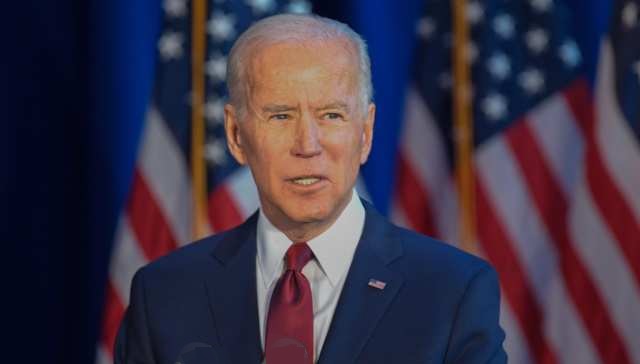
In final interview as president, Biden tells Israel to ‘accommodate’ Palestinian concerns

World Israel News:

Biden also said that Israel would be unable to thrive in the long term without dealing with the ‘Palestinian question.’

In his last interview as President, Joe Biden told MSNBC that Israel must “accommodate legitimate concerns of Palestinians.”

“Prime Minister Benjamin Netanyahu has to find a way to accommodate the legitimate concerns of Palestinians for the long-term sustainability of Israel,” he declared.

Biden also said that Israel would be unable to thrive in the long term without dealing with the “Palestinian question.”

Speaking about his sometimes fractious relationship with Israeli Prime Minister Benjamin Netanyahu, Biden said, “I kept reminding my friend, and he is a friend, although we don’t agree on a whole lot lately, Bibi Netanyahu, that he has to find a way to accommodate the legitimate concerns of a large group of people called Palestinians, who have no place to live independently.”

President Joe Biden signed an executive order extending sanctions on a group of Israeli settlers living in Judea and Samaria, accusing them of “extremism” that undermines American foreign policy and the prospects for a two-state solution.

The sanctions, which target Israeli Jews labeled as “extremists” by the Biden administration, were extended less than a week before President-elect Donald Trump is set to take office.

Biden initially signed the executive order on February 1, 2024, allowing federal authorities to freeze assets and block transactions involving individuals deemed by the U.S. government to be “extremist Israeli settlers.”

Claims from left-wing NGOs in Israel prompted the move and reports from the United Nations, which accused settlers in Judea and Samaria of engaging in violence and harassment against Palestinian Arabs following the October 7 attacks.

On Tuesday, Biden issued a statement announcing the extension of the sanctions for another year, describing the actions of the sanctioned settlers as an “unusual and extraordinary threat” to U.S. national security and foreign policy.

“The situation in the West Bank — in particular high levels of extremist settler violence, forced displacement of people and villages, and property destruction — has reached intolerable levels and constitutes a serious threat to the peace, security, and stability of the West Bank and Gaza, Israel, and the broader Middle East region,” Biden claimed.

RELATED ARTICLES:

Terrible, Horrible Hostage Deal Announced

Biden Administration Indulges Unreasoning Islamophilia to the Very End

Senior Hamas Leader Praises October 7 Massacre Stating it Will “Remain a Source of Pride”, Vows Destruction of Israel

Muslim CIA Analyst Admits to Leaking Israeli Strike Plans on Iran

RELATED VIDEO: David Wood and Robert Spencer — Ceasefire Edition

EDITORS NOTE: This Newsreal News Desk column is republished with permission. ©All rights reserved.


Download the Newsrael App: Google PlayAppStore

The Crisis in California is more than Fire!

By Lyle J. Rapacki, Ph.D.

Mere words are far too inadequate to express sympathy for all in the greater LA area who were adversely impacted by the fires; the loss of homes, family air looms and deeply held personal items of memories, businesses of all sizes and makes, and especially loss of life. Mere words truly are inadequate expressing sorrow but many, many across America are sincerely concerned with shared feelings of sadness compounded by anger and disbelief toward California elected officials who have shown such egregious nonchalant attitudes and feigned concern. The lack of a properly coordinated, prepared and aggressive response by First Responders only adds to the multitude of emotions running rampant as did the flames. First Responders from multiple agencies and designs are just as sorrowful and angry but their training does not permit them to express such except through higher command. First Responders from multiple agencies and design will also have to deal with PTSD of various levels given the mammoth undertaking they were forced into, but with little to no positive outcomes. The entire experience that unfolded shall have a seriously adverse and hurtful impact for years to come on fire fighters, police and most especially those citizens who have gone through personal loss.

Former LA Sheriff Alex Villanueva, former LA County Attorney Steve Cooley, and retired Commander John Satterfield of the LA County Sheriff’s Department spoke, for what I believe are many First Responders stating clearly that elected leaders’ incompetence was truly compounded by their devotion to leftist narratives. Former Sheriff Villanueva stated clearly, “the degree of mismanagement is epic. Its incompetence married with poisonous ideology.” Revealed during these fires was that fire department leadership, along with elected officials, were far more focused on DEI, not on preparing and fighting fires. Left wing agendas and ideology have been far more important than making certain fire trucks were sufficient and operational, equipment and all matters associated with fighting fires were reviewed and prepared.

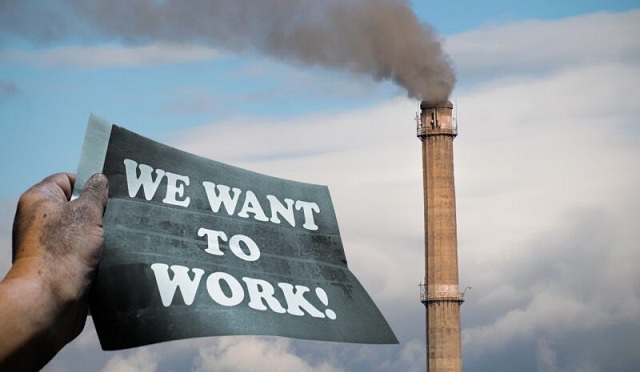
Governor Newsome and his network of leftist ideologues across California have turned this once magnificent state into a hell hole. Leftist ideology is almost hysterical, definitely primary in recruiting at all levels and with politicians seeking office. The cartoon I placed at the top of my commentary sadly speaks to what the Marxist ideology in California, and, indeed, in many cities across America has created. The adherents to the destructive heinous liberal, socialist ideology fully adopted by many California elected leaders and their appointees, are a contributing factor to the fire catastrophe. It is no wonder such socialist acolytes are fearful of Trump coming into the White House and bringing old-fashion America loving individuals with him to clear out a federal government which echos the California government.

A leaked confidential memo shared among selected LA officials shows in writing that far leftist, DEI acolyte LA Mayor Karen Bass demanded a $48.8 million from the fire budget on top of $17.6 million already approved for the 2024/2025 budget year. But this did not stop this incompetent radical DEI promoter from taking funds from the fire department and allocating $170,000 for “Social Justice Art” and $100,000 for “transgender cafes and let me not leave out major funding from fire budgets to fund homeless programs. I pray the citizens of California wake up and shout, “ENOUGH!” Enough of Newsome and his cronies up and down the state, and enough of LA Mayor and her cronies.

Again…I am so very sorry for the loss of life and my sincere sympathy for all who have loss homes and deeply held personal items of memories.

©2025 All rights reserved.

RELATED ARTICLE: Why Los Angeles is burning

The Difference Between Being “Smart” and Being Idiosyncratic

By Long Run News

How many times have you heard statements like, “This person has a master’s from Stanford,” or “They hold a PhD in economics from Harvard”? Such remarks carry an implied message: we should trust and listen to these individuals based solely on their prestigious credentials. Consider a more familiar scenario from your experience in school—someone was labeled “smart” because of their GPA or accolades. Yet there’s a critical distinction between being conventionally “smart” and being idiosyncratic—a person who thinks or acts in a uniquely individualistic way.

Today, we can no longer afford to blindly trust credentials or institutions. The elite, often products of these prestigious universities, have championed ideologies like neoliberalism and globalization, enriching a select few while sidelining the average American worker. To challenge this, we must scrutinize the frameworks of our educational system, questioning its emphasis on conformity over creativity and its prioritization of standardized intelligence over authentic originality.

To understand our elites, we must first understand how they are educated. The theoretical purpose of education is to teach knowledge that shortens the learning curve for capable individuals, enabling them to focus more time on mastering their profession. Consider mechanic school as an example. Fixing cars is a craft, and at mechanic school, students are taught techniques and shortcuts that significantly enhance their efficiency and skill.

In theory, you could learn to repair cars—or enter any profession—without formal instruction, relying solely on trial and error over time. However, mechanic school condenses this process. What might take four or more years to learn independently can be mastered in just one year through structured lessons and real-world exercises. This is the ideal of education: a reasonable and effective way to accelerate expertise.

Yet, it’s important to recognize that formal schooling is not the only path to mastery. Many have fallen into the trap of believing that expertise can only be achieved through university education and that experts are defined solely by their credentials. This simply isn’t true. You can become an expert in a field without ever having studied it formally. True knowledge and skill can come from experience, self-education, and dedication outside the walls of academia.

What, then, has become the purpose of education today? The unfortunate reality is that education is now primarily about acquiring accreditation—a degree that acts as a license to work. Most students aren’t in school to truly learn; they are there to obtain the credentials necessary to secure a job. In many universities, students learn little of practical value because the education system is not tailored to the specific jobs they might take after graduation. Instead of teaching a craft or preparing students for real-world challenges, higher education often serves as little more than a mechanism to grant credentials.

This issue is compounded by the abstract and theoretical nature of many educational programs, particularly in managerial and administrative fields. The further removed education becomes from practical application, the more it devolves into exercises in theory—detached from reality. Complicating matters, universities are often reluctant to fail students. Failing a student means losing tuition revenue, so the incentive to push students intellectually is overshadowed by the financial incentive to pass them, regardless of their competence. This dynamic fosters an environment where mediocrity is tolerated, and genuine intellectual growth is stifled.

Now consider elite liberal arts education. Every society has an elite, and that elite must emerge from somewhere. Historically, elites arose from aristocracy, with power inherited through family lines. In the United States, however, meritocracy created an avenue for talented individuals from all walks of life to rise through the educational system. Elite liberal arts institutions once served to cultivate originality and independent thought among the best and brightest. These schools were meant to teach students how to teach themselves—how to become lifelong learners capable of mastering any subject.

Unfortunately, this ideal has been largely forgotten. Today, not only elite liberal arts colleges but higher education across Western democracies have become ideological echo chambers. These institutions often prioritize propagating a single worldview—typically aligned with leftist ideologies—over fostering genuine intellectual exploration. Students are encouraged to dismiss alternative perspectives rather than critically evaluate them. Such one-sided indoctrination undermines the very purpose of education.

A truly idiosyncratic and open-minded person is willing to entertain any idea, assess its merits, and determine its validity. Education should cultivate this openness and independence of thought, but in its current state, it falls far short of this ideal.

People who are deeply ideological often lack the ability to think critically. Ideology, by its nature, demands acceptance without question. When someone is taught to adhere to an ideology, they are not encouraged to challenge or analyze it—and as a result, they struggle to argue effectively or even entertain alternative perspectives. This inability to question their own beliefs leaves them unprepared to navigate a complex and nuanced world.

Consider a simple trade, like being a mechanic. A mechanic has a specific skill set and gets hired by a firm that needs their expertise in fixing cars. The relationship is straightforward: they perform their craft, get paid, and the transaction is complete. However, as one ascends into more elite or managerial roles, things become increasingly complicated. Motivations are no longer as clear-cut, and the work requires navigating layers of complexity.

For example, if you work in upper management at a public relations firm, your task might involve creating an advertising campaign to persuade people to buy a product. Unlike fixing a car, this requires understanding human emotions, needs, and desires—and crafting a message that taps into them effectively. It’s no longer a matter of simply applying a trade; it’s about influencing behavior in subtle, intricate ways. This complexity demands critical thinking, creativity, and adaptability—qualities that rigid ideological thinking cannot provide.

Another problem with elite education is the narrow and rigid path required to gain admission to top-tier schools. It’s not just about perfect grades and test scores; students must participate in numerous activities and maintain spotless disciplinary records. The process demands such careful navigation that it stifles natural intellectual curiosity and vitality. A person who is genuinely curious and full of energy is bound to make mistakes—it’s part of being human. Ironically, the most capable individuals often fail the most, and that’s a good thing. Mistakes provide valuable lessons, fostering growth and resilience that shape more capable adults in the long run. However, in today’s system, a single misstep as a teenager can disqualify someone from entering these elite institutions. This means that the very people who might contribute the most are often excluded, while those who succeed in this rigid framework come with their own set of potentially dangerous flaws.

The profile of students who gain admission to elite universities has been distilled into a very specific type. These individuals are highly intelligent and ambitious, but they are also rigidly compliant, rule-following, and extremely risk-averse. They avoid taking any action that could jeopardize their position, focusing solely on what they know will advance their prospects. While this mindset may be well-suited for roles in risk-averse industries like insurance, it is far less effective in most other fields—especially leadership roles, where boldness and innovation are critical. Additionally, these students are often unwilling to challenge the consensus. When faced with prevailing opinions or trends, they follow along almost robotically. This blind adherence to conformity not only stifles their ability to think independently but also leaves them oblivious to absurdities that more critical thinkers would immediately question and reject.

Another notable quality of these elite students is their pronounced individualism. While ambition naturally fosters some degree of individualism—since the drive to outdo others often separates people from the pack—these students take it to an extreme. They have little sense of belonging to something greater than themselves and primarily look out for their own interests, often at the expense of others. Universities do little to foster any sense of collective responsibility or mutual support, leaving everyone to fend for themselves.

This hyper-individualism also makes them susceptible to corruption, though not always in the obvious sense of bribery. While slipping a $100 bill to a police officer is overt corruption, the kind found among elites is often subtler. For example, a CEO stepping down to take a role as chairman of a government regulatory agency overseeing their former industry is a more insidious form of corruption—one that is quietly normalized and even encouraged in elite circles. Compounding the issue is that these students often lack real-world working experience, leaving them ill-prepared to understand or navigate the broader implications of their actions.

Elite students are taught to craft narratives as a substitute for reality, believing that the ability to spin compelling stories equates to being “smart.” This approach thrives in academic environments because these elite institutions exist within insulated bubbles of privilege and wealth, often financed by staggering student loans. Within these bubbles, students can create their own “reality” and ignore the real world, shielded from critique or accountability. As a result, they end up living in a carefully constructed fantasy, detached from the complexities and challenges of life outside their academic enclaves.

The result is that these students graduate with impressive credentials but little to no real-world experience. Government agencies and corporations assume that a degree from an elite university signifies competence, taking these graduates seriously—even if they are mediocre or lack true capability—simply because of the institution’s prestige. Admission to these elite schools effectively determines who will become the future leaders of society. Those who control admissions wield immense power, as they shape the pool of individuals who will ascend to positions of influence.

Moreover, these students are singularly focused on their own advancement and will do whatever it takes to gain admission and remain in good standing at these institutions. Unfortunately, many of today’s graduates lack the ability to think critically. Instead, they parrot the ideological ideas they were taught in university, having been trained to conform rather than to question or innovate.

True creativity is finite—it ebbs and flows. While we can’t easily quantify or measure it, we instinctively know it exists. The key lies in recognizing where and when to express it. For instance, your clothing might serve as a canvas for creativity in certain social settings, but you cannot—and should not—be original in every facet of life. Selectively applying creativity is essential. Attempting to “reinvent the wheel” at every opportunity can lead to wasted effort or missed opportunities.

Think back to school. Perhaps you tried to stand out—through your clothing, your writing, or even the way you expressed ideas. Maybe you submitted a paper that was experimental or unconventional. Sometimes it resonated; other times it fell flat. The problem is that schools often don’t reward this kind of thinking. Our education system, rooted in standardized testing and rigid expectations, tends to stifle originality in favor of practicality. I’ve personally written thought-provoking, original papers only to receive mediocre grades. Instead of being rewarded, my creativity was penalized, ultimately impacting metrics like GPA that are deemed critical for success.

This disconnect reflects a deeper societal issue: the tension between individuality and conformity. The solution is not to suppress creativity but to channel it strategically. Recognize the areas of your life where originality will benefit you most—and focus your efforts there. Save your creative energy for pursuits where it matters, rather than squandering it in contexts where conformity is rewarded.

Originality is like a wild beast. If untamed, it can harm you; but if controlled and directed, it becomes a powerful ally. Reflect on the choices you’ve made—on those original ideas or projects that didn’t pay off. Consider instead how you can wield your creativity deliberately, aligning it with areas where you want to excel. By doing so, you’ll not only stand out but also thrive in a world that often undervalues the power of independent thought.

Ultimately, good judgment is not a product of high IQ or prestigious credentials—it comes from real-world experience and learning through failure. Failing as a young person provides invaluable lessons that shape stronger, more capable adults. In contrast, those who have always been risk-averse and strictly compliant, doing only what they are told, avoid mistakes but also miss the opportunity to develop sound judgment. Without the experience of making and correcting poor decisions, they grow into adults who lack the wisdom to navigate complex situations or discern the best course of action.

AUTHOR

Antonio Ancaya

©2025 . All rights reserved.

From Hollywood to Anime: Why Modern American Entertainment is Garbage

By Long Run News

The American youth of today have become captivated by Japanese art, with anime emerging as the most popular genre of entertainment for Gen Z. This medium enthralls audiences with its unique blend of artistic storytelling, cultural depth, and emotional resonance. Unlike traditional Western animation, anime caters to a broad spectrum of viewers, offering genres and themes ranging from action-packed adventures and heartwarming romances to philosophical explorations and dark thrillers. Its rise in popularity can be attributed to factors such as increased accessibility through streaming platforms, the global influence of Japanese pop culture, and the visually striking art style and complex characters. This cultural phenomenon has transcended entertainment, becoming a significant aspect of American pop culture and a bridge to exploring Japanese traditions and modern society.

The meteoric rise of anime in the United States also underscores a subtle yet deeply rooted dissatisfaction with modern American entertainment. Hollywood movies, sitcoms, and cartoons have faced mounting criticism for failing to resonate with audiences, particularly younger viewers. Modern Disney films, for instance, are losing millions of dollars on nearly every new release, signaling a disconnect between content creators and their intended audience.

One of the primary grievances with modern American entertainment is the overemphasis on characters’ emotions at the expense of action and plot. For example, in the Disney+ series She-Hulk, the titular character spends nearly seven episodes focusing on personal issues without fully embracing her superhero identity. This results in a narrative where, despite the series’ title, the central character rarely embodies the action and stakes associated with being the Hulk. The issue isn’t the character’s gender but rather the lack of engaging storytelling and meaningful action. Modern American art often reveals a deeper truth about its creators: an aversion to risk and a preference for introspection over dynamism.

Additionally, there is a growing cultural disconnect between the characters in modern American entertainment and the audiences they aim to represent. Characters are often portrayed as facing trivial difficulties that are easily overcome, failing to reflect the real struggles and sacrifices many viewers experience. Traditional storytelling tropes, such as the hero’s journey, are often ignored. Historically, superheroes would face minor challenges in Act 1, followed by a significant defeat in Act 2, forcing them to overcome adversity at great personal cost before ultimately triumphing in Act 3. These stories resonated because they mirrored the struggles of real life, where success often requires sacrifice and perseverance.

However, modern entertainment frequently bypasses these traditional arcs. Instead of compelling narratives, audiences are presented with characters who rarely face significant adversity or make meaningful sacrifices. This disconnect leaves viewers feeling unfulfilled and alienated, as the stories no longer reflect their values or experiences. Take, for instance, the 2016 Ghostbusters reboot, which replaced the original male leads with women. The film was widely criticized, not because of the gender swap but because it lacked depth and compelling storytelling. Support for the film often seemed driven by political agendas rather than genuine appreciation for its content, further alienating audiences.

This phenomenon is not limited to film but extends to literature as well. For decades, identity politics has infiltrated the publishing industry. While genre fiction by authors like Stephen King and J.K. Rowling continues to thrive, much of what is considered “serious” literature struggles to find an audience. Many readers question the purpose of identity politics in entertainment, as it often prioritizes representation over substance.

The portrayal of “diverse” characters in modern American media often exacerbates the problem. Characters from minority groups—whether Black, Hispanic, or LGBTQ+—are frequently depicted as facing either insurmountable challenges, such as systemic oppression, or trivial ones that require no real effort to overcome. Moreover, these characters often lack depth, focusing excessively on their identity rather than engaging with broader conflicts or narratives. For example, the 2023 series Velma reimagined the classic Scooby-Doo characters but shifted the focus to discussions about race and ethnicity, sidelining the mystery-solving that defined the original series. This approach alienates audiences who seek meaningful stories rather than overt political messaging.

Writers and filmmakers who attempt to address real-world struggles often face suppression from major studios and publishers. The gatekeepers of American entertainment, shaped by academic ideologies, prioritize identity politics over relatable and compelling storytelling. This has led to a shrinking market for American entertainment, as audiences increasingly turn to international media for narratives that resonate with them. Diverse characters in American films and shows are often portrayed as infallible, with minimal obstacles to overcome. They are rarely challenged by other characters, and their victories are framed as personal rather than tied to broader narratives. This lack of stakes and growth leaves audiences disengaged.

The root issue lies in how modern American entertainment avoids addressing the realities of the human experience. In life, good often loses in the short term, and victory comes only through immense sacrifice and effort. By shielding characters from real adversity, creators betray a desire to escape the challenges of the real world. Yet, this escapism fails to connect with viewers who understand that hardship and struggle are intrinsic to meaningful storytelling.

A bitter conclusion emerges: the creators of modern American entertainment do not respect the minorities they claim to champion. Those who oppose identity politics view individuals as unique, valuing the content of their character rather than reducing them to stereotypes. In contrast, identity politics often portrays minorities as monolithic groups defined solely by their struggles, rather than as complex individuals with diverse experiences. This patronizing approach diminishes the authenticity of their stories and reinforces negative stereotypes.

For instance, in many modern narratives, white characters are often the only ones depicted as facing significant adversity, while minority characters are protected from meaningful challenges. This dynamic reinforces the idea that minorities are incapable of overcoming obstacles, an idea that is both insulting and untrue. Audiences who value individuality and meritocracy reject these portrayals, seeking stories that celebrate universal human struggles rather than dividing people into identity groups.

This is why modern American entertainment struggles to resonate. It prioritizes political messaging over authentic storytelling, leaving audiences yearning for narratives that reflect the complexity and depth of real life. In contrast, international media like anime thrives because it embraces universal themes, compelling characters, and dynamic storytelling. By focusing on the human experience rather than identity politics, anime and other international entertainment mediums offer audiences the connection and inspiration they crave.

Ultimately, the decline of modern American entertainment serves as a wake-up call for creators. To regain the trust and attention of audiences, they must return to the fundamentals of storytelling: compelling characters, meaningful adversity, and universal themes. Only by respecting the intelligence and individuality of their viewers can they hope to create art that truly resonates. Until then, the American youth will continue to look abroad for the stories that speak to their hearts and minds.

AUTHOR

Antonio Ancaya

©2025 . All rights reserved.

Luigi Mangione, Political Violence, and The Illusion of Progress

By Long Run News

Having been born in Honduras, I’ve seen firsthand the effects of political violence—a grim reality familiar to many across Latin America. Political violence often functions as a tool for power, used by politicians and parties to suppress dissent and consolidate control. “One hand washes the other,” as the saying goes: the politicians empower the rioters, and the rioters support the politicians.

But political violence is not always spontaneous. There are instances when unrest erupts out of sheer frustration with leadership, triggered by significant or seemingly trivial events. A prime example is the Rodney King Riots in 1992—six days of civil unrest fueled by public outrage over police brutality. However, not all instances of political violence arise organically.

On December 4, 2024, in Midtown Manhattan, the nature of political violence took a chilling turn.

The Catalyst: The Murder of Brian Thompson

In the early hours of that day, Brian Thompson, CEO of UnitedHealthcare, was shot and killed outside the New York Hilton Midtown Hotel. Thompson, a controversial figure, had become a lightning rod for public anger due to UnitedHealthcare’s perceived exploitation of patients and sky-high premiums. His policies, which were widely criticized for prioritizing profit over patient care, made him a symbol of corporate greed in the American healthcare system.

The accused, 26-year-old Luigi Mangione, was no ordinary suspect. A University of Pennsylvania graduate with a degree in economics, Mangione’s profile defied expectations. He came from a middle-class family in New Jersey and had excelled academically. Yet, Mangione’s later writings, found in his apartment, revealed a deep disillusionment with the U.S. healthcare system and the broader economic inequalities he believed it represented. His online posts spoke of “economic violence” inflicted on ordinary Americans and labeled corporate executives like Thompson as “tyrants.”

Mangione’s act of violence was not an isolated incident of personal grievance but a reflection of a larger, growing sentiment of frustration and anger. To many who felt crushed by systemic inequities, his act symbolized a form of retribution, however morally repugnant. The public’s response was startling. What would have been universally condemned a decade ago was met with a mix of cheers, sympathy, and outrage. On social media, hashtags such as #JusticeForMangione and #CorporateAccountability trended, illustrating a troubling shift in societal attitudes toward violence as a political statement.

This reaction demonstrates how polarization and systemic failures can transform acts of individual violence into symbolic gestures that resonate with larger political movements. Mangione’s crime was not merely personal; it was politicized, amplified by ideological divisions, and framed as a radical but inevitable response to perceived injustices.

The Rise of Polarization

The growing use of political violence cannot be separated from the deepening polarization within our society. The divisions between the professional-managerial class and other groups have intensified, often manifesting in ideological clashes. These groups, representing diverging interests and priorities, are locked in an escalating conflict.

Class tensions exacerbate this divide. While issues like feminism, migration, and LGBTQ rights dominate headlines, they are often symptoms of a broader problem: systemic inequality. The professional-managerial class, serving entrenched economic interests, benefits from a system that marginalizes others. This deepens societal rifts and drives people to ideological extremes.

Both sides of the political spectrum bear responsibility for this polarization. On the Left, groups like Antifa engage in activities that are tacitly condoned by some leaders, eroding public trust in institutions. On the Right, inflammatory rhetoric and the rise of extremist factions contribute to the cycle of hostility. Acknowledging the culpability of both sides is essential for an honest conversation about the roots of political violence.

Historical Lessons

The people who inflict violence and get away with it, they usually win and then they start inflicting this political violence on not just their opponents but ultimately on the entire people. Why? Because they need the violence to stay in power and staying in power becomes an end of itself and therefore the use of violence becomes an end of itself. They need to keep on using the violence, more and more repression, and abuse to stay in power. This story is not new, it is a tale as old as time and the United States is not an exception to this.

History is replete with examples of leaders who weaponized political violence for short-term gain, leaving behind legacies of destruction and trauma. Adolf Hitler’s rise in Nazi Germany serves as a stark example. In 1934, during the Night of the Long Knives, Hitler ordered the purge of the Sturmabteilung (SA) leadership, a paramilitary group that had helped him gain power but was perceived as a threat to his regime. This violent consolidation of power eliminated rivals and secured the loyalty of the military, but it also entrenched a culture of fear and repression that defined the Nazi regime. Similarly, his use of the Gestapo to silence dissent further illustrates how political violence suppresses opposition at the cost of long-term stability.

The Bolshevik Revolution in Russia relied heavily on violence to overthrow the Provisional Government. Following their seizure of power in 1917, the Bolsheviks, under Lenin and later Stalin, initiated the Red Terror. This campaign targeted perceived enemies of the revolution, including political opponents and members of the bourgeoisie. Stalin’s Great Purge in the 1930s further amplified this violence, leading to the execution and imprisonment of millions. These actions secured short-term control but created a legacy of fear and societal fragmentation that haunted Russia for decades.

These examples illustrate a critical lesson: political violence, while seemingly effective in the short term, fosters resentment, fear, and instability. It is a tool that prioritizes coercion over consensus, making its gains unsustainable.

Grievances vs. Violence

Americans have legitimate grievances about the healthcare system, economic inequality, and systemic failures. Sky-high costs, denied claims, and deaths from medical negligence fuel anger and hopelessness. However, resorting to political violence undermines the very foundation of democracy.

Violence silences opposition and instills fear, bypassing the democratic process of debate and mutual understanding. While it may yield immediate results, these changes lack the durability of reforms achieved through consensus and dialogue. A society that normalizes violence sacrifices its ability to resolve conflicts peacefully, trading stability for temporary power.

A New Era of Violence in the United States

In the United States, political violence is a relatively new phenomenon compared to other parts of the world. Yet, its trajectory is all too familiar. It begins with the illusion of progress but ultimately suppresses opposition through fear.

The murder of Brian Thompson and the subsequent public reaction marks a turning point. Mangione’s actions, whether seen as a desperate protest or a reprehensible crime, underline the dangerous potential of systemic failures to fuel political violence. When grievances are ignored or dismissed, they fester and manifest in ways that threaten the foundations of a democratic society.

We must ask ourselves: Is this the society we want? A society where fear, not reason, dictates change?

Political violence is not a shortcut to meaningful progress; it is a dangerous detour that erodes the foundations of democracy. History teaches us that societies built on fear and repression are inherently unstable, fostering division and ultimately leading to ruin.

A Path Forward

To combat the rise of political violence, we must address the underlying causes of polarization. This includes tackling economic inequality, rebuilding trust in institutions, and fostering civic education that emphasizes dialogue and mutual respect. Politicians, community leaders, and everyday citizens must prioritize consensus over conflict and dialogue over division.

We must also resist the temptation to justify violence, regardless of its source. Condemning violence consistently and unequivocally sends a clear message: no grievance, however legitimate, justifies the erosion of democratic principles.

The future of our society depends on our ability to recognize political violence for what it is: a dangerous illusion of progress. By learning from history and committing to peaceful resolution, we can build a more just and stable society for all.

AUTHOR

©2025 . All rights reserved.

Our Leaders are Terrorists

By Long Run News

Terrorism is a term we hear constantly, yet rarely do people take the time to define what it truly means. At its core, terrorism is the use of violence, or the threat of violence, to instill fear and achieve political objectives. Terrorists commit random acts of violence that incite fear, forcing the population to comply with their demands. This dynamic of fear and submission is what drives terrorism.

But who are the real terrorists today? Surprisingly, they might not be who we think. Our leaders in Western democracies have mastered this same technique—using fear to control the masses and consolidate power. Through a climate of constant fear, they steer people in the direction they want, manipulating us under the guise of protecting us from threats. Instead of quelling the sources of fear, they amplify them, tightening their grip on power in the process.


The Cultivation of Fear: COVID-19 and Beyond

During the COVID-19 pandemic, fear became a virtue. Hypervigilance was praised while healthy skepticism was vilified. Questioning vaccine efficacy or lockdown measures was enough to get someone censored, ostracized, or even fired. Former White House Press Secretary Jen Psaki suggested banning individuals from all platforms if they were removed from one—a chilling attack on free speech.

Fear was weaponized to paralyze citizens into compliance. Masks, social distancing, and vaccine mandates became symbols of submission. Meanwhile, leaders ignored fundamental health strategies like promoting exercise and mental well-being. This wasn’t about health—it was about control. The elevation of fear stifled debate, restricted freedoms, and conditioned the population to accept authoritarian measures under the guise of safety. But COVID-19 was just one chapter in a broader strategy of control. Western leaders have long exploited fear to consolidate power, much like the authoritarian regimes they claim to oppose.


The Doctrine of Chaos: Lessons from “A Clean Break”

To understand how fear and chaos are weaponized as tools of control, we must examine the geopolitical strategies outlined in A Clean Break: A New Strategy for Securing the Realm. This 1996 policy paper, authored by Richard Perle for the first Netanyahu government, advocated destabilizing the Middle East to strengthen Israel’s position. The strategy rejected diplomacy and peace-building in favor of deliberate chaos, targeting nations like Iraq, Syria, and Iran for regime change and fragmentation.

Though initially too radical for Israel, A Clean Break found eager supporters among American neoconservatives. The Project for the New American Century (PNAC) embraced its chaos-first approach, aligning it with the Wolfowitz Doctrine of U.S. global hegemony. The strategy manifested in the U.S. invasions of Iraq and Afghanistan and interventions in Libya and Syria, creating a cycle of perpetual instability that served American and Israeli interests while devastating local populations.

This doctrine of chaos wasn’t limited to foreign policy. Its principles—destabilization, fear, and control—were repurposed for domestic use. Western leaders adopted these tactics to undermine their own populations, exploiting crises to justify censorship, surveillance, and the erosion of civil liberties.


Victoria Nuland and the Weaponization of Diplomacy

Victoria Nuland’s role in orchestrating the 2014 Ukraine coup highlights how chaos is manufactured to serve broader agendas. The U.S.-backed overthrow of Ukraine’s government destabilized the region and escalated tensions with Russia, all under the guise of supporting democracy. In reality, this was a calculated move to weaken a geopolitical rival while enriching defense contractors and energy companies.

Nuland’s actions epitomize the neoliberal obsession with power and profit. Democracy is a facade, a tool to justify interventions that prioritize corporate and strategic interests over human lives. The same playbook is applied domestically: destabilize society, sow division, and consolidate power under the guise of protecting freedom.


Neoliberalism: The Root of Modern Tyranny

Neoliberalism, the economic philosophy championed by American liberals and neoconservatives alike, underpins this strategy of control. Sold as a path to prosperity, neoliberalism has instead hollowed out the middle class, outsourced jobs, and concentrated wealth among elites. Deregulation and globalization—hallmarks of this ideology—have left Western democracies vulnerable to economic exploitation and social decay.

Ronald Reagan’s policies, often revered by older conservatives, initiated this decline. Deregulation encouraged corporations to offshore manufacturing, weakening America’s industrial base. Immigration policies further eroded national cohesion, creating a cheap labor force at the expense of American workers. While Reagan’s era is nostalgically viewed as a time of prosperity, it marked the beginning of a neoliberal experiment that has failed spectacularly, leaving citizens disillusioned and divided.


Trump and the Threat of Elimination

The attempted assassination of Donald Trump serves as a stark reminder of how far the establishment will go to maintain its grip on power. Trump’s populist agenda—challenging globalization, prioritizing American workers, and exposing corruption—posed a direct threat to the neoliberal order. The attack on his life, coupled with relentless media vilification and legal battles, underscores the lengths to which elites will go to silence dissent.

Trump’s presidency revealed the fragility of the neoliberal regime. His election was a rejection of the status quo, a sign that Americans were waking up to the manipulation and betrayal they had endured for decades. The establishment’s response—censorship, propaganda, and even violence—laid bare their true nature: modern-day terrorists exploiting fear and division to maintain control.


Fear as the Ultimate Weapon

Whether it’s the chaos of the Middle East, the hysteria of the COVID-19 pandemic, or the manufactured crisis of cancel culture and censorship, fear is the common denominator. Fear paralyzes, divides, and controls. It is the weapon of choice for leaders who have abandoned democratic principles in favor of authoritarian rule.

The real terrorists, however, don’t wear hoods or carry guns. They wear expensive suits, sit in offices of power, and pretend to act in your best interest. They manipulate the masses with a constant stream of fear, securing more control for themselves.

AUTHOR

Antonio Ancaya

©2025 . All rights reserved.

Evolution Of Political Parties

By Long Run News

Political parties have undergone profound transformations since their inception, both in the United States and across the globe. These changes reflect the evolution of societal norms, economic priorities, technological advancements, and ideological shifts. Understanding how modern political parties diverge from their origins necessitates an examination of the principles upon which they were established and the contextual forces that have reshaped them.

The Origins of Political Parties

Political parties were not part of the original blueprint for democratic governance. In fact, the Founding Fathers of the United States expressed deep skepticism about the rise of factions. James Madison, in Federalist No. 10, warned against the “mischiefs of faction,” fearing they could subvert the public good for private interests. Despite these apprehensions, parties emerged almost immediately as mechanisms to organize political competition and governance.
In the early years of the U.S. republic, two primary factions crystallized into parties: the Federalists and the Democratic-Republicans. The Federalists, led by Alexander Hamilton, championed a strong central government and a modern financial system. In contrast, the Democratic-Republicans, led by Thomas Jefferson, emphasized states’ rights and agrarianism. These parties were rooted in clear ideological distinctions and regional interests but lacked the rigid structures and expansive platforms of contemporary parties.
Globally, early political parties often formed around revolutionary movements or narrow class interests. In Europe, parties such as the British Conservative and Liberal parties evolved from parliamentary factions. Similarly, socialist and labor parties emerged in response to industrialization and workers’ rights movements. These early parties were generally ideologically driven, reflecting the specific concerns of their time.

Evolution of Political Parties Shift from Ideology to Pragmatism

One of the most significant shifts in political parties is their transition from strict ideological adherence to a more pragmatic, voter-centered approach. In the United States, this transformation was evident by the late 19th century. The Democratic and Republican parties, which supplanted the earlier Federalist and Whig parties, began prioritizing electoral success over strict adherence to founding principles. For instance, the Republican Party, founded in the 1850s on an anti-slavery platform, shifted its priorities over time, aligning with business interests and later becoming the party of limited government and social conservatism. Similarly, the Democratic Party, originally rooted in Jeffersonian agrarianism and Jacksonian populism, evolved to champion civil rights and progressive policies by the mid-20th century.
This shift is not unique to the United States. In Europe, traditional socialist parties, which once represented the working class, have moderated their platforms to appeal to broader constituencies. This pragmatism often blurs ideological lines, prompting criticism that parties lack a coherent vision.

Centralization and Professionalization

Modern political parties are far more centralized and professionalized than their predecessors. Early parties were loose coalitions of like-minded individuals. Today, parties operate as highly organized entities with national committees, dedicated fundraising arms, and sophisticated marketing operations. The rise of mass media and digital technologies has accelerated this trend, enabling parties to target voters with unprecedented precision.
This centralization has diminished the influence of local party organizations and grassroots movements. In the 19th century, local party bosses wielded significant power, particularly in urban centers. Today, power is concentrated in national leadership, which sets the agenda and controls resources. This shift has alienated some voters, who feel disconnected from party elites.

Influence of Money and Media

The role of money in politics has profoundly shaped modern parties. In the United States, the rise of Political Action Committees (PACs) and Super PACs, coupled with landmark decisions such as Citizens United v. FEC (2010), has made fundraising a central focus for parties. This reliance on large donors and corporate contributions often skews priorities away from grassroots concerns.
Media has also transformed party dynamics. In the 19th century, parties relied on partisan newspapers to disseminate their messages. Today, the 24-hour news cycle, social media, and algorithm-driven platforms have created an environment where sensationalism often overshadows substantive debate. Parties have adapted by embracing sound bites, slogans, and image-based campaigning, which can oversimplify complex issues and polarize public opinion.
Divergence from Founding Principles

Ideological Shifts

Both major U.S. parties have strayed from their founding ideologies. The Republican Party, originally the party of abolition and civil rights, became the party of the “Southern Strategy” in the late 20th century, aligning with conservative white voters in the South. Conversely, the Democratic Party, which once championed segregation in the South, transformed into a coalition of minorities, urban progressives, and liberal intellectuals.
Globally, many parties have similarly drifted from their origins. For example, Britain’s Labour Party, founded to represent working-class interests, has often faced internal conflicts over its ideological direction, particularly during the leadership of figures such as Tony Blair, who embraced a centrist “Third Way” approach.

Populism and Polarization

Modern parties are increasingly shaped by populism and polarization. Populist movements often emerge within or alongside established parties, challenging traditional elites and norms. Donald Trump’s rise within the Republican Party exemplifies this trend, as does the influence of figures such as Bernie Sanders on the Democratic Party’s progressive wing.
Polarization further exacerbates the divergence from founding principles. In highly polarized environments, parties prioritize opposition to their rivals over policy innovation. This zero-sum mentality undermines the collaborative spirit that early parties often embodied, particularly in parliamentary systems where coalitions are necessary for governance.

Fragmentation and Realignment

The rigidity of modern party structures has led to fragmentation and realignment. In many democracies, traditional parties face challenges from new movements and independent candidates. In the United States, third-party efforts such as Ross Perot’s 1992 presidential campaign or the Green Party’s environmental advocacy highlight voter dissatisfaction with the two-party system.
In Europe, the rise of far-right and far-left parties reflects discontent with centrist politics. Movements like France’s National Rally or Greece’s Syriza have capitalized on economic and cultural anxieties, forcing traditional parties to adapt or risk obsolescence.

The Impact of Technology and Globalization Digital Campaigning

The digital revolution has transformed how parties operate. Social media platforms enable direct communication with voters but also amplify misinformation and echo chambers. Data analytics and artificial intelligence allow parties to micro-target voters, raising ethical concerns about privacy and manipulation.

Globalization and Transnational Issues

Globalization has introduced new challenges that parties must address, such as climate change, migration, and international trade. These issues often transcend traditional ideological boundaries, requiring parties to adopt nuanced positions that may conflict with their historical platforms.
Modern political parties are far removed from their origins. While they were once ideologically driven and locally oriented, they have become centralized, professionalized entities focused on mass appeal and electoral success. The influence of money, media, and technology has further reshaped their priorities, often at the expense of grassroots engagement and ideological coherence. Polarization, populism, and the complexities of globalization continue to challenge traditional party structures, prompting realignment and innovation.
Despite these changes, political parties remain indispensable to democratic governance. They organize competition, aggregate interests, and provide a framework for policy-making. The key challenge for contemporary parties is to balance pragmatism with principle, ensuring they remain responsive to the evolving needs of the electorate while staying true to their foundational values.

AUTHOR

Aiman Benjamaa

©2025 . All rights reserved.

Senators Express Optimism That Trump Will Restore Pro-Life Policies at HHS

By Family Research Council

Following four years of the Biden administration reversing the pro-life federal policies established during President Donald Trump’s first term, Republican senators are expressing confidence that the incoming Trump administration will put back in place policies that blocked federal funds from going to abortion businesses, allowed pregnancy resource centers to receive federal funds, and stopped the funding of international groups that promote abortion, among other measures.

After Trump nominated former Democrat Robert F. Kennedy Jr. to serve as his secretary for the U.S. Department of Health and Human Services (HHS) last November, concerns arose among numerous GOP lawmakers and pro-life advocacy groups that the former Democrat-turned-Independent presidential nominee would sideline pro-life policies based on his past pro-abortion positions. During his presidential run, Kennedy has called the abortion issue “nuanced and complex” and also said that the state should not “dictate choices that the woman is making” regarding abortion. He has also previously supported (and walked back support for) three-month pro-life protections.

However, Senate Republicans like Josh Hawley (R-Mo.) say they have received personal assurances from Kennedy that he will not pursue pro-abortion policies while in office and will, in fact, enact pro-life ones. Last month, Hawley posted a series of tweets describing his conversation with Kennedy regarding the issue. “He committed to me to reinstate President Trump’s prolife policies at HHS,” Hawley wrote. “That includes reinstating the Mexico City policy & ending taxpayer funding for abortions domestically.”

The senator further noted Kennedy’s promise to have all pro-life deputies at HHS and that he “believes there are far too many abortions in the US and that we cannot be the moral leader of the free world with abortion rates so high.” Hawley also stated that Kennedy promised to reinstate “the bar on Title X funds going to organizations that promote abortion” and to “reinstate conscience protections for healthcare providers.”

During Tuesday’s edition of “Washington Watch with Tony Perkins,” Senator Steve Daines (R-Mont.) confirmed that he too met with Kennedy and also received assurances from him that he would pursue pro-life policies within the federal agency.

“We had a very robust discussion,” he explained. “In fact, talking about the importance of protecting the pro-life policies in terms of regulations coming out of HHS, but importantly, restoring any policies that the Biden administration has stripped, and to … work with the secretary of State [to ensure] we are doing all we can within the executive branch to make sure these protections are in place and, frankly, expanded. And he told me that he’ll have seven [deputies in] HHS [that] would be pro-life type of leaders. And I appreciate that honesty and frankness from RFK Jr.”

The news comes amid uncertainty surrounding how pro-life Trump’s second administration will be after the president-elect oversaw watered-down pro-life language inserted into the 2024 Republican Party platform last July, which was entirely revamped and truncated from the previous GOP platform. Trump also repeatedly said on the campaign trail last year that he would leave the abortion issue to the states and that some state pro-life protections are “too tough.” The 45th president’s inconsistent rhetoric on the issue has left pro-life lawmakers and advocates wondering if he would, in fact, use his executive authority to undo the pro-abortion executive orders that President Joe Biden enacted.

Nevertheless, in an op-ed published Monday, Hawley reiterated his optimism that the president-elect will restore the pro-life policies that were reversed under Biden. The senator noted that in addition to restoring the Mexico City Policy, barring abortion businesses from receiving Title X grant money, and restoring federal funding to pregnancy resource centers, Trump’s first-term HHS also “restrict[ed] the use of human fetal tissue obtained from abortions.”

“The Biden administration gutted those rules,” Hawley concluded. “Thankfully, it’s a new day. And President Trump has the power to start protecting life again — immediately. He should use that power boldly to protect those who most need it: the innocent unborn.”

AUTHOR

Dan Hart

Dan Hart is senior editor at The Washington Stand.

EDITORS NOTE: This Washington Stand column is republished with permission. All rights reserved. ©2025 Family Research Council.


The Washington Stand is Family Research Council’s outlet for news and commentary from a biblical worldview. The Washington Stand is based in Washington, D.C. and is published by FRC, whose mission is to advance faith, family, and freedom in public policy and the culture from a biblical worldview. We invite you to stand with us by partnering with FRC.

Rubio: China Is ‘Most Potent, Dangerous Threat America Has Ever Confronted’

By Family Research Council

Amidst the announcement this week of a major international operation to remove China state-sponsored malware from thousands of computers worldwide, U.S. officials and lawmakers are sounding the alarm that Xi Jinping’s communist regime is waging an increasingly malicious and aggressive effort to undermine the U.S. and other free democracies across the globe.

On Tuesday, the Department of Justice announced that it had completed a “multi-month enforcement operation” in which it was able to delete “PlugX” malware from over 4,200 computers across the globe, with the help of the FBI and French law enforcement. The malware was used by Chinese Communist Party (CCP) hackers to “infect, control, and steal information from victim computers.” The operation comes on the heels of significant breaches by CCP operatives of U.S. internet service providers and the U.S. Treasury Department.

Over the weekend, outgoing FBI Director Christopher Wray remarked during an interview that the Chinese government is “the defining threat of our generation.” He went on to detail how China’s cyberwarfare program “is by far and away the world’s largest — bigger than that of every major nation combined and has stolen more of Americans’ personal and corporate data than that of every nation, big or small, combined.” He further stated that state-sponsored hackers have burrowed deep within “American civilian critical infrastructure” and “lie in wait on those networks to be in a position to wreak havoc and can inflict real-world harm at a time and place of their choosing.”

Nominated officials within the incoming Trump administration are also signaling that they are clear-eyed about the threat that China poses to the U.S. During a Senate hearing on Wednesday with secretary of State nominee Senator Marco Rubio (R-Fla.), the lawmaker called the communist regime “the most potent and dangerous, near-peer adversary this nation has ever confronted.” He went on to observe that unless the U.S. takes a more offensive posture in confronting China within the next decade, “much of what matters to us on a daily basis — from our security to our health — will be dependent on whether the Chinese allow us to have it or not.”

Rubio’s comments echoed those of John Ratcliffe, whom President-elect Donald Trump nominated to serve as CIA director. During his confirmation hearing Wednesday, Ratcliffe, who previously served as director of national intelligence during the first Trump administration, commented, “I openly warned the American people that from my unique vantage point as an official who saw more intelligence than anyone else, I assessed that China was far and away our top national security threat,”

During Wednesday’s “Washington Watch with Tony Perkins,” Rep. John Moolenaar (R-Mich.) offered further warnings about the threat that Xi Jinping’s regime poses.

“[I]t is very serious,” he underscored. “We’ve seen the Chinese … monitoring people’s phone conversations at the highest levels of government. We’ve seen their hacking [of] public infrastructure. … And we’ve seen them spying on American territory. Right in our home state of Michigan, we had five Chinese nationals spying at Camp Grayling watching military exercises. So they are very aggressive, and they have a surveillance state that at home that oppresses 1.3 billion Chinese, and they’re wanting to export that around the world.”

Moolenaar, who serves as chairman of the House Select Committee on the Chinese Communist Party, went on to argue that the U.S. must be extremely careful with its economic partnerships with China.

“One of the goals of our committee, which is very bipartisan, is to make sure we aren’t funding our own demise,” he explained. “We’re not funding businesses that work with the People’s Liberation Army. We’re not funding technologies … that could be used against our American men and women in the armed forces. [T]his is an all-hands-on-deck effort to restrict an aggressive power. When you think of the Soviet Union and the Cold War, we never would have partnered with them on the kinds of things we partner with China on. And I think Ronald Reagan had it right: peace through strength. Let’s make sure we don’t help our adversaries succeed.”

Family Research Council President Tony Perkins pointed to Americans’ consumer habits as contributing to the CCP threat. “[C]onsumers in this country that are attracted to cheaper Chinese products … are actually fueling our adversary, that they’re turning those profits into what we saw here, dispatching these hackers to break into U.S. databases and other infrastructures.”

Moolenaar concurred, noting that the CCP has “laws on the book, what they consider to be national security laws that require anyone … doing business in China to be accountable to the Chinese Communist Party. And if they require information, there is no such thing as a private sector. They have a military-civil fusion that gives priority to the military or the Chinese Communist Party. So it’s a very different framework than we’re used to dealing with. So that’s what makes it so serious when we trade or when we invest in Chinese entities that can all be used against us and our allies.”

Moolenaar additionally noted that there have been some recent successes in American entities separating themselves from the CCP. “[T]here were over 30 partnerships in universities in the United States that were partnering with Chinese universities and funded often by Department of Defense dollars, and they were collaborating on research in the highest technologies of physics, even weapons, all sorts of things. So we raised this issue, and fortunately, Berkeley, Georgia Tech, and most recently the University of Michigan have discontinued those.” He also reported that Congress is working on requiring Chinese tech companies like Huawei to be removed from “our supply chains for our defense industrial base.”

Moolenaar concluded by agreeing with Wray and Rubio’s sobering assessment of the threat posed by China. “Cyber is now one of the major domains for warfare … land, water, sea, space, cyber — all of those are key. … We need to make sure that we’re aware that China is trying to hack us every day and trying to pre-position malware on our devices that would threaten our way of living.”

AUTHOR

Dan Hart

Dan Hart is senior editor at The Washington Stand.

RELATED VIDEO: Treasury Department breached by Chinese hackers | NewsNation Now

EDITORS NOTE: This Washington Stand column is republished with permission. All rights reserved. ©2025 Family Research Council.


The Washington Stand is Family Research Council’s outlet for news and commentary from a biblical worldview. The Washington Stand is based in Washington, D.C. and is published by FRC, whose mission is to advance faith, family, and freedom in public policy and the culture from a biblical worldview. We invite you to stand with us by partnering with FRC.

Proposed Gaza Ceasefire Is a ‘Terrible Deal for Israel’

By Family Research Council

1/17/2025 9:16 a.m. This story has been updated to reflect that the Israeli Cabinet has voted to approve the ceasefire deal.


A prisoner exchange and ceasefire deal between Israel and Hamas was reached Wednesday, President Joe Biden announced. But, after “many months of intensive diplomacy” between the U.S., Egypt, and Qatar, the deal they devised would require Israel to give away the farm, leaving them no leverage to ensure that all their hostages are safely returned. “It’s a terrible deal for Israel,” complained Frank Gaffney, president of the Institute for the American Future. “I fear that it amounts to a victory for Hamas.”

The details of the deal have not been published, but according to reports, the ceasefire agreement would occur in three phases.

In the first phase, Israel would release 100 Palestinian prisoners serving life sentences (a.k.a. “pedigreed jihadists,” Gaffney stated) and 1,000 other prisoners not involved with the October 7 attacks, and Hamas would release 33 hostages in return. “I’m getting some signals out of Israel that this is not the best deal for Israel,” said Family Research Council President Tony Perkins. “I’m told the ratio is 50-to-1 for every hostage.”

These lopsided prisoner exchanges would be spaced out over a six-week ceasefire — an unexplained delay that left Perkins “a little puzzled” — during which time Israel would pull its military out of all the populated areas of Gaza and allow hundreds of aid trucks to enter the Gaza Strip, bringing humanitarian aid and tens of thousands of temporary homes.

In the second phase, the two sides would declare a permanent end to the war, and Israel would withdraw the rest of its forces from Gaza. Hamas would also release more hostages in exchange for more prisoners.

In the third phase, Hamas would return the rest of the hostages, including the remains of those it killed. In return, it would get “a major reconstruction plan for Gaza,” in President Biden’s words.

To review, Israel would have to pack up and go home before getting the hostages it came for, and Hamas would not only have its pre-October 7 autonomy restored, but it would get its own personal Marshall Plan, and spring 50 terrorists per hostage.

What an odd way to punish its terrorist atrocities! What an odd way to deter future iterations.

Unfazed by these particulars, Biden declared he was “deeply satisfied” that a deal had been reached — likely so he can claim credit. “We got the world to endorse it,” he boasted. Given how the world feels about Israel, that should be a warning sign.

“I think it’s, in some ways, worse than the plan … that Joe Biden put together” last year, said Gaffney. By agreeing to this deal, Israel would be “effectively surrendering the entirety of Gaza to the people who perpetrated this horrific attack on October 7th,” and who have “been at war with Israel … from the inception of this terrorist organization and will be until it is put out of business.”

“All of the progress that Israel has made to root out Hamas, to deprive it of resources, to close its infrastructure … will essentially be undone because they will be allowed to have the run of Gaza again,” warned Gaffney.

And all of this assumes that Hamas will keep up its end of the agreement through all three phases. But that might be the least likely outcome, based on its past behavior and genocidal hatred of Israel. “Hamas broke ceasefires with Israel in 2003, 2007, 2008, and nine times in 2014,” listed National Review’s Jim Geraghty, not to mention a terrorist shooting during a ceasefire in 2024.

Over the past year, Geraghty continued, “Hamas either rejected ceasefire proposals or hostages-for-prisoners trades, walked away from the table, or refused to restart negotiations in the months of December, January, February, March, April, May, June, and July 2024. … Hamas has proven a bad-faith, bloodthirsty, irrational, and self-destructive negotiator at every step in this process.”

The deal is so bad for Israel that it could put Israeli Prime Minister Benjamin Netanyahu in trouble domestically. “The Left has, of course, wanted his head on a pike for a long time,” said Gaffney, but “there are a lot of people now on the right who feel that all of this is for naught — all of the war efforts — if this [deal] is allowed to go forward.” Throughout the war, Israel has maintained its sovereign right to self-defense, which involves the right to react to the ongoing threat posed by Hamas, a terrorist group operating from within its borders.

National Security Minister Itamar Ben Gvir and Finance Minister Bezalel Smotrich have come out against the deal; while aligned with Netanyahu, they control enough votes to destabilize his coalition. “This could cause his governing coalition to implode,” Perkins exclaimed.

If fact, it seems that Netanyahu himself was reluctant to agree to the deal, until he met with Steve Witkoff, Trump’s incoming special envoy to the Middle East. The Biden administration’s State Department spokesman Matthew Miller confirmed that input from Trump’s team was “absolutely critical in getting this deal over the line.”

“Bibi [Benjamin Netanyahu] basically had his knees broken” by Witkoff, said Gaffney. “He took what Donald Trump meant as leverage on the Hamas terrorists, putting them on notice that if the hostages were not released … by the time he came to office … all hell would break loose. Now, that was intended to be pressuring Hamas. Instead, Witkoff — and the Biden team, of course — turned this into leverage on Bibi Netanyahu.”

In fact, Gaffney suspected Witkoff of showing more loyalty to Qatar than to Trump. Witkoff said “that ‘Qatar is doing God’s work in these negotiations.’ I think he might have meant Allah’s work, because what has been done, I think, is not in the service of Israel,” he alleged. “This is a man who may work for Qatar, but I don’t honestly think he’s worked effectively for Donald Trump or the interests of the United States, to say nothing of Israel.”

Trump initially celebrated the “EPIC” ceasefire agreement that “could only have happened as a result of our Historic Victory in November, as it signaled to the entire World that my Administration would seek Peace and negotiate deals to ensure the safety of all Americans, and our Allies.”

But Gaffney cautioned that Trump might not have the full picture. “I hope that the president, Donald Trump, will think better of this as he learns more about what’s been done,” he said. “I’d be a little surprised if President Trump knew when he put [Witkoff] in this position that he had actually done a $600 million hotel deal with the nation of Qatar.”

The Israeli cabinet approved the deal “after examining all political, security, and humanitarian aspects, and understanding that the proposed deal supports the achievement of the war’s objectives, the Ministerial Committee for National Security Affairs (the Political-Security Cabinet) has recommended that the government approve the proposed framework..”

Netanyahu accused Hamas of creating a “last-minute crisis” by making additional demands over the identity of the prisoners Israel will release. Netanyahu explained the deal Israel agreed to “gives Israel veto power over the release of mass murderers who are symbols of terror,” but Hamas now “demands to dictate the identity of these terrorists.”

Instead of approving the lopsided ceasefire right away, Israel launched overnight airstrikes against 50 terrorist targets in Gaza. Hamas-aligned sources claimed that the airstrikes killed at least 75 people — most of whom were probably terrorists. In a statement, the IDF confirmed the death of Muhammad Hasham Zahedi Abu Al-Rus, a terrorist who participated in the October 7, 2023 massacre at the Nova Music Festival.

The world may be ready to move on from Hamas’s atrocities, but Israel will not — cannot — rest secure until the Hamas threat within their own borders has been eliminated.

AUTHOR

Joshua Arnold

Joshua Arnold is a senior writer at The Washington Stand.

EDITORS NOTE: This Washington Stand column is republished with permission. All rights reserved. ©2025 Family Research Council.


The Washington Stand is Family Research Council’s outlet for news and commentary from a biblical worldview. The Washington Stand is based in Washington, D.C. and is published by FRC, whose mission is to advance faith, family, and freedom in public policy and the culture from a biblical worldview. We invite you to stand with us by partnering with FRC.

Amit Segel: Israel ‘WON by a knock-out’ and will now focus on Iran!

By NEWSRAEL Telling the Israeli Story

Amit Segel, intelligent and articulate political analyst for Channel 12 wrote this last night. He is optimistic, and explains why.

We bravely faced 20,000 rockets, a number that has not been fired at any country in the world for decades

We eliminated the master murderer Nasrallah

The senior echelon of Hezbollah is no more

No more threat of invasion

80% of the rockets and missiles that threatened every point in the country are gone

Only the future will tell what will happen,  but our people’s sacrifice was not in vain

In the past year, Israel has broken the paralyzing barrier of fear that prevented it from acting against Hezbollah and Iran

The IDF entered southern Lebanon from the bottom, reached Litani, hitting Beirut at will.

The whole Middle East is watching.

The “unity of the arenas” was the ‘brainchild’ of ​​Soleimani, Nasrallah and Sinwar and it has finally died with them. 

The expectation from the public in Israel is to demand that its leaders finally abandon the policy of “inclusion”.

NETANYAHU: After the “ceasefire” – We’ll focus on Iran

Israel and Hezbollah have agreed to implement a US-brokered ceasefire deal that Prime Minister Benjamin Netanyahu says will allow Israel to focus on Iran.

IRAN INTERNATIONAL — Israel’s security cabinet approved the ceasefire deal on Tuesday and the whole cabinet is due to review it later in the day. Lebanon and Hezbollah have also agreed to the proposal which is expected to be implemented on Wednesday.

“The ceasefire deal with Lebanon now means Israel will focus on Iran’s threat”, Netanyahu said in a speech following the approval of the truce deal.

Netanyahu said there were three reasons to pursue a ceasefire: to focus on Iran, to replenish depleted arms supplies and give the army a rest and finally to isolate Hamas, whose attack on Israelis on October 7, 2023, triggered a devastating war in Gaza and saw Hezbollah join conflict with Israel.

HITTING THE ‘HEAD OF OCTOPUS’

Netanyahu said that he is “determined to do whatever it takes to prevent Iran from obtaining nuclear weapons.”

“That threat has always been my top priority and is even more so today, (is) when you hear Iran’s leaders state over and over again their intention to obtain nuclear weapons,” the Israeli prime minister said. “For me, removing that threat is the most important mission to ensure the existence and future of the State of Israel.”

Israel’s defense minister said earlier this month the nuclear facilities of the Islamic Republic are now more vulnerable than ever, following Israel’s October 26 airstrikes which targeted Iran’s key air defense systems.

The Israeli air raids last month knocked out Iran’s last three Russian-provided S-300 air defense missile systems, Fox News reported at the time citing US and Israeli officials. The surface-to-air S-300s were the last in the Islamic Republic’s arsenal after one was destroyed in an attack in April which was also likely carried out by Israel.

“We destroyed major parts of Iran’s air defense system and missile-manufacturing capabilities, and we demolished a significant component of their nuclear program,” Netanyahu said in his Tuesday speech, calling Iran the “head of the octopus”.

Iranian authorities have consistently called for Israel’s destruction and consistently refuse call it by name but refers to it as the “Zionist entity”.

EDITORS NOTE: This Newsrael News Desk column is republished with permission. ©All rights reserved.

Terrible, Horrible Hostage Deal Announced

By The Geller Report

Let me preface this post but saying I have not written about the ongoing news reports on this proposed hostage deal partly because I didn’t want to believe Israel would make such a terrible mistake. Hamas is incapable of keeping any agreement and so I hoped it would fall apart at the last minute.

Breaking: Under heavy US 🇺🇲 pressure, Israel 🇮🇱 agreed to release 1,300 terrorists, cease fighting H×mas and leave most of Gaza, in return for release of only 33 hostages (out of 98), of which only 23 alive and 10 dead.(X)

I am hoping that the Israelis are at the very least somehow able to keep track of the worst terrorist killers soon to be released and kill each one as time unfolds.

No pressure has been exerted on Hamas for it to renounce its official charter of genocide towards Israel and Jews everywhere. This failure and its previous promises of more attacks like Oct. 7th. guarantees war in the not too distant future.

I would like to know what Steve Witkoff said to Netanyahu to make him agree to this dreadful deal so quickly. Were encouraging guarantees and promises given to help Israel destroy Hamas in the near future and to wipe out all of Iran’s nuclear facilities with bunker-busting bombs or were intimidating threats made?

In the meantime, I’m sick to my stomach.

Israel plans to release 30 terrorists for each civilian hostage and 50 terrorists for every military hostage, according to Reuters.

Over 6,000 Palestinian terrorists invaded Israel with the chants of “Allah Akbar” as they raped, murdered, slaughtered and butchered Israeli civilians.

Gaza is a barbaric, savage society full of rapists and murderers. They’re all demons and monsters. pic.twitter.com/nfGfJIr4SE

Prime Minister Netanyahu Spokesperson: “Reports about IDF withdrawal from the Philadelphi axes are a complete lie; The PM has not given up a millimeter of Israeli control over the Philadelphi axis.”

The hostage deal between Israel and Hamas is expected to be signed as early as Wednesday night and the first hostages my be released on Sunday.

Israel National News: Israeli officials said on Wednesday that there has been a breakthrough in the negotiations to reach a deal with the Hamas terror organization to return the Israeli hostages. “We’re working on tying up the last loose ends before a final agreement,” the officials stated, noting that the agreement will most probably be signed later in the evening or on Thursday.

If the deal were to be signed on Thursday, the first three hostages could be expected to be released on Sunday. On the seventh day of the deal, four hostages will be released, on the 14th, 21st, 28th, and 35th days three will be released, and during the final week, the remaining 14 hostages will be released.

Live Updates:

Wednesday, January 15th:

7:52 p.m.: The Prime Minister’s Office stated that in light of Prime Minister Netanyahu’s firm stance, Hamas backed down from its demand to change the deployment of forces on the Philadelphi Corridor

7:38 p.m: Israel has agreed to double the number of aid truck entering Gaza from 300 to 600.

7:34 p.m.: Avera Mengistu and Hisham al-Sayed who have been held hostage by Hamas since 2014 and 2015 respectively, will reportedly be released on the sixth day of the deal.

7:26 p.m.: President-elect Donald Trump: “This EPIC ceasefire agreement could have only happened as a result of our Historic Victory in November, as it signaled to the entire World that my Administration would seek Peace and negotiate deals to ensure the safety of all Americans, and our Allies. I am thrilled American and Israeli hostages will be returning home to be reunited with their families and loved ones.

“With this deal in place, my National Security team, through the efforts of Special Envoy to the Middle East, Steve Witkoff, will continue to work closely with Israel and our Allies to make sure Gaza NEVER again becomes a terrorist safe haven. We will continue promoting PEACE THROUGH STRENGTH throughout the region, as we build upon the momentum of this ceasefire to further expand the Historic Abraham Accords. This is only the beginning of great things to come for America, and indeed, the World!

“We have achieved so much without even being in the White House. Just imagine all of the wonderful things that will happen when I return to the White House, and my Administration is fully confirmed, so they can secure more Victories for the United States!”

7:20 p.m.: Incoming White House Special Envoy to the Middle East Steve Witkoff told N12: “This deal has been reached thanks to many and it illustrates that a policy of peace through strength wins. Thank you to the Israeli negotiation team, thank you to the Qatris, thank you to Egypt, thank you to the Biden administration, and most of all, thank you to Donald Trump whose policy of peace through strength his what won.”

7:17 p.m.: Israeli President Isaac Herzog met now with the President of the International Red Cross, Mirjana Spoljaric, and her team, who are visiting Israel as part of preparations for the hostage deal.

During the meeting, President Herzog emphasized the utmost importance and sensitivity of this mission. The Red Cross team briefed the President on the preparations for the transfer of the hostages and the various challenges they face.

7:05 p.m.: US President-elect Donald Trump writes on Truth Social: “WE HAVE A DEAL FOR THE HOSTAGES IN THE MIDDLE EAST. THEY WILL BE RELEASED SHORTLY. THANK YOU!”

7:00 p.m.: Reuters reports that in the hostage deal that is expected to be announced soon, Israel will free 30 imprisoned terrorists for ever civilian hostage Hamas releases and 50 imprisoned terrorists for every female soldier who is freed.

6:48 p.m.: An Israeli official has confirmed to Kan News that the disagreement surrounding the Philadelphi Corridor has been solved.

6:36 p.m.: Axios Barak Ravid says a senior US official has told him that a hostage and ceasefire deal has been reached.

6:30 p.m: Hamas says that a short time ago, its leadership gave its answer to the proposed deal to the mediators “The Hamas diplomatic bureau is currently holding an emergency meeting to discuss the mediators’ proposal, Hamas will act responsibly and positively out of a commitment to the Palestinian people in the Gaza Strip to bring to the end of the aggressions.”

6:06 p.m.: A senior diplomatic source says that at the last moment, Hamas decided to demand new conditions for the hostage deal.

“A short time ago, the Israeli negotiation team updated that the Hamas terror organization decided at the last moment to make new demands – this time regarding the Philadelphi corridor, this is in contrast to the maps that were approved by the Cabinet and the American mediators. Israel strongly objects to any changes to these maps.”

5:58 p.m.: In light of reports about an imminent agreement, the members of the Hostages and Missing Families Forum stated that they welcome and deeply appreciate the return of every hostage – “each one representing hope and relief not only for their immediate family but for our entire community.”

They added that they “urgently call for a framework that ensures the return of every person held captive.

“After more than 460 days, our loved ones continue to endure unimaginable. Though we celebrate each reunion, our mission remains unfinished until all hostages – both the living and the dead – are returned home. For the 30 hostages murdered in captivity, this agreement comes tragically too late.

“This agreement marks a crucial step, but it must be carried through to completion in all its stages. We hope it leads to a comprehensive deal ensuring everyone’s safe return. We will not rest until we see the last hostage back home.”

5:55 p.m.: Minister of Foreign Affairs Gideon Sa’ar announced that he is concluding his diplomatic visit to Italy this evening, during which he met, among others, with Italian Deputy Prime Minister and Foreign Minister Antonio Tajani, Deputy Prime Minister and Minister of Infrastructure and Transport Matteo Salvini, and Minister of Justice Carlo Nordio. Sa’ar also met with the President of Chamber of Deputies Lorenzo Fontana and members of the Italy-Israel Parliamentary Friendship Association. Additionally, he held a meeting with dozens of influencers and Israel advocacy activists in Italy and gave interviews to local media outlets.

Following the progress in the hostage release negotiations, Minister Sa’ar cut short the continuation of his diplomatic visit, which was scheduled to continue tomorrow in Hungary. He will return to Israel tonight to participate in the expected discussions and votes in the Security Cabinet and government.

5:45 p.m.: Prime Minister Netanyahu has begun a situational assessment with the negotiation team in Doha.

5:38 p.m.: Representatives of President Biden and President-elect Trump will attend the statement by the Qatari prime minister on the hostage deal.

5:12 p.m.: Cabinet Secretary Yossi Fuchs said that the hostage deal includes the IDF remaining on the Philadelphi Corridor and the possibility of resuming combat operations in Gaza if Hamas does not advance to the next stages of the deal.

“The May 27 deal was approved by the US on August 16 and includes the map of IDF forces remaining in the Philadelphi Corridor, a perimeter along the entire Gaza border, and the possibility of returning to fighting at the end of Phase A if negotiations on Phases B and C do not mature in a way that ensures the realization of the war’s goals: the military and governmental destruction of Hamas and the return of all the hostages,” said Fuchs.

5:10 p.m.: Minister Bezalel Smotrich met with Minister of Strategic Affairs Ron Dermer to discuss the hostage deal.

5:08 p.m.: Report: Qatari PM will hold a press conference this evening to discuss the hostage negotiations.

4:53 p.m.: Prime Minister Benjamin Netanyahu will convene a situational assessment regarding the hostage deal at 5:30 p.m. Israel time.

4:28 p.m.: A Hamas source says the terror organization gave its verbal approval of the deal draft but has not yet approved it in writing.

4:01 p.m.: The Bibas family, whose loved ones Kfir and Ariel are the youngest hostages being held by Hamas, commented on reports that they will soon be released. “We are aware of reports stating that our family is included in phase one of the agreement and that Shiri and the children are among the first scheduled to be released. Given our experience with disappointments, we consider nothing final until our loved ones cross the border.

“We are waiting for certainty regarding their release and condition, and request not to be contacted during this sensitive time. We ask that people refrain from spreading rumors.

“We continue to appeal to the Prime Minister and demand the return of everyone until the last hostage is home.”

3:16 p.m.: The Israeli Prime Minister’s Office denied that Hamas had given a positive answer: “Contrary to reports, the Hamas terrorist organization has yet to provide an answer regarding the deal.”

3:10 p.m.: A spokesman for the Prime Minister clarified that the terrorists who murdered the Fogel family will not be released as part of the hostage deal.

3:06 p.m.: Report: Israel’s Security Cabinet will convene tomorrow morning to vote on the hostage deal.

3:05 p.m.: Sources with knowledge of the negotiations to I24News: Hamas has given the green light for the deal

The breakthrough in the negotiations comes after the Hamas leadership, during a decisive early-morning meeting, came to an agreement on all points and solved all disagreements. Mohammed Sinwar, leader of the Hamas terror group in Gaza and brother of arch-terrorist Yahya Sinwar, mastermind of the October 7 massacre, has granted a ceasefire-prisoner swap deal approval, “in principle,” the Wall Street Journal reported.

According to the report, Sinwar’s approval follows a full day of silence on the part of Hamas and comes hours after the terror group announced that the deal was in its final stages.

During the talks, Hamas accepted, according to the WSJ report, verbal guarantees from the US, Qatar, Egypt, and Turkey, that Israel will continue the negotiations for a permanent ceasefire following the end of the first stage of the deal.

Parallel to this, a Palestinian Arab source told Kan News that a breakthrough had occurred in negotiations, and an agreement is expected to be announced on Thursday.

The source added that a defining meeting had concluded during the early morning hours, during which Hamas leadership agreed on all points and all of the disagreements were resolved, including most – but not all – of the details on the maps for Israel’s withdrawal from Gaza.

The source added that an agreement may begin to be implemented within 24-48 hours of it being announced.

EDITORS NOTE: This Geller Report is republished with permission. All rights reserved.

Think TikTok’s Bad? Check Out The Latest Chinese App Driving American Kids Wild

By The Daily Caller

If you thought TikTok was bad, just wait until you hear about RedNote.

As the Supreme Court weighs the future of TikTok, teen girls obsessed with the app aren’t taking any chances. They’ve already begun to migrate to another Chinese psyop, a new social media app endearingly called “RedNote.”

The real name of the app is Xiaohongshu, and it’s widely popular in China with 300 million users. That translates literally to “Little Red Book” — a nod to the pamphlet of Mao Zedong quotes widely distributed during China’s Cultural Revolution — but it was shortened by American teens to simply, “RedNote.”

The app is culturally very Chinese, so it’s no surprise that it never caught on with Americans. But with TikTok’s fate hanging in the balance, US mobile downloads tripled over the past week, CNN reported. That’s more than 700,000 Americans about to get obliterated by Chinese propaganda (to say nothing of the data vulnerability). TikTok at least has a patina of Americanism; RedNote is straight-up, well — Red.

“Our government is out of their minds if they think we’re going to stand for this TikTok ban,” one seemingly American user said in a RedNote video message, which has racked up more than 45,000 likes. “We’re just going to a new Chinese app, and here we are.”

Of course, the numbers could very well be manipulated here. It plays to China’s advantage to make it appear as though American teens have a love affair with China over their own government. So in a mutual show of cultural respect, Chinese users are reportedly helping these “TikTok refugees” learn to navigate the app. One Chinese tech analyst told CNN that the potential TikTok ban “unexpectedly created one of the most organic forms of cultural exchange between the US and China we’ve seen in recent years.”

That’s surely what China would like you to believe, but the truth remains to be seen. However, for any American who simply can’t resist this Chinese entrapment, perhaps they should consider changing their allegiances more permanently. I’ve heard China is lovely this time of year.

AUTHOR

Gage Klipper

Commentary and analysis writer.

RELATED ARTICLE: Trump’s First Big Test Could Make Or Break His First 100 Days

EDITORS NOTE: This Daily Caller column is republished with permission. ©All rights reserved.

DEEP STATE GEARING UP: Nearly Half of Federal Employees in the Swamp Plan to Resist Trump, Poll Finds

By The Daily Signal

A surprising number of federal government employees admit they are gearing up to act like a deep state, opposing the incoming second administration of Donald Trump.

Most Americans, even many of the elites who voted for Vice President Kamala Harris, are willing to support Trump’s administration, according to an RMG Research survey commissioned by the Napolitan Institute. Yet 42% of federal government managers who work in the Washington, D.C., swamp intend to work against the administration.

RMG Research conducted three surveys in mid-December to study three different segments of the population. The polling firm focused on what it calls the Elite 1% who have postgraduate degrees, earn more than $150,000 annually, and live in densely populated areas; Main Street Americans who meet none of these three criteria and who represent between 70% and 75% of the U.S. population; and Federal Government Managers—federal employees who live in the National Capitol Region around Washington and earn at least $75,000 annually.

Main Street Americans tend to have less faith in government and want more freedom for Americans, while the Elite 1% tend to have more faith in government and say Americans have too much freedom. Main Street Americans tend to look down on the idea of a deep state opposing the people’s elected president.

Favorable Headwinds for Trump, With One Exception

The poll found that many Americans are willing to support the new administration, even among the elites and even among those who voted for Harris.

The survey asked, “Looking ahead to the next four years, will your political efforts be primarily to support the Trump administration or resist the Trump administration?”

Most Main Street Americans (59%) said they would support the new administration, while only 28% said they would resist it. Even the Elite 1% proved more likely to say they would support (48%) than resist (39%) the administration.

Even some of those who said they voted for Harris in November said they would support the new administration. Twelve percent of Harris voters said they will work to at least somewhat support the new administration.

On Election Day, 64% of the Elite 1% voted for Harris while only 34% voted for Trump. Yet among the Elite 1% who voted for Harris, a quarter (26%) said they are working to support the new administration.

Federal Government Managers, however, proved evenly split, with only 44% saying they would support the administration and 42% saying they would resist it.

Government Employees Joining the Resistance

Unsurprisingly, Federal Government Managers proved more gung-ho about resistance when they identified as Democrats.

While the vast majority of government employees who identify as Republicans plan to support the administration (89% “somewhat support” or “strongly support”), almost three quarters of Democrat bureaucrats plan to resist (73% “somewhat resist” or “strongly resist”). More than half of Republican managers (52%) said they would “strongly support” the administration, while 40% of Democrats said they will “strongly resist” it.

A quarter of all managers (26%), whether Democrat or Republican, plan to “strongly support” the administration, and only a slightly smaller portion (23%) say they will “strongly resist” it.

The survey also asked Federal Government Managers what they would do if Trump gave them a lawful order that they considered to be bad policy. Only 17% of Democratic managers who voted for Harris would follow Trump’s order. Three times as many (64%) said they would ignore the order and do what they thought was best. This amounts to a declaration that they plan to act like a deep state, opposing the people’s elected president.

Voters did not look kindly on the idea of bureaucrats refusing to follow orders, however.

More than half (54%) of Main Street Voters said that a bureaucrat who refuses to follow a lawful order from the president should be fired, and even most of the Elite 1% (52%) agreed.

Most Republican managers (74%) say a bureaucrat should be fired for refusing a presidential order, while only 23% of Democratic managers agree.

A Yawning Gulf

When asked about the most important political issue at the moment, Federal Government Managers had different priorities than Main Street Americans and voters as a whole. (The survey asked an open-ended question, rather than giving a list.)

Main Street Americans proved more likely to mention some version of the economy (40%) or immigration (18%) as the top issues, as did voters overall (39% chose the economy and 17% chose immigration). Fewer Main Street Americans named some version of America’s politics (4%), abortion (6%), or Trump (4%).

Even the Elite 1% seemed closer to Main Street Americans than the Federal Government Managers. The elites named the economy (26%), America’s politics (11%), and immigration (7%) as their top issues.

While the economy proved the top issue for bureaucrats, as well, only 18% chose it. Another 11% chose immigration.

Many of the Federal Government Managers selected issues that didn’t register for most other Americans, such as guns and crime (10%), climate change (6%), education (5%), equality (5%), and cybersecurity (5%).

While these are important issues—and I’d like to see how many bureaucrats named some version of gun control and how many named increasing crime rates—they reveal a gap in priorities between bureaucrats and the people for whom they write the rules.

RMG Research surveyed 1,000 registered voters between Dec. 12 and Dec. 13; 1,000 Elite 1% voters between Dec. 9 and Dec. 19, and 500 federal government managers between Dec. 9 and Dec. 23. The margin of error for the Elite 1% is plus or minus 3.1% and the margin of error for federal government managers is plus or minus 4.4%.

What Does This Mean?

This survey confirms that bureaucrats in the administrative state are planning to oppose Trump from within, whether that means by refusing lawful orders or by engaging in political activism against Trump outside of work hours.

This deep state phenomenon undermined the first Trump administration, and the president has pledged to fight it aggressively in the new one.

My forthcoming book, “The Woketopus: The Dark Money Cabal Manipulating the Federal Government,” reveals how major left-wing donors prop up a vast network of woke activist groups that staff and advise the federal government. This vast influence network held sway in the Biden administration but will not end on Jan. 20.

Congress can help Trump combat this deep state phenomenon by passing laws preventing public sector unions in the federal government, restraining regulations, and reining in agencies that have been insulated from Congress and the president, such as the Consumer Financial Protection Bureau.

AUTHOR

Tyler O’Neil

Tyler O’Neil is managing editor of The Daily Signal and the author of two books: “Making Hate Pay: The Corruption of the Southern Poverty Law Center,” and “The Woketopus: The Dark Money Cabal Manipulating the Federal Government.” Tyler on X: @Tyler2ONeil.

RELATED VIDEO:

Related posts:

This Trump Pick Can Silently Strangle the Deep State

What’s Next for the Woke Bureaucrats in the Administrative State?

Reforms Trump Needs Congress to Pass to Root Out the Deep State

EDITORS NOTE: This Daily Signal column is republished with permission. ©All rights reserved.


The Daily Signal depends on the support of readers like you. Donate now

The California Marxist Government’s Incompetence and the Burning Down of Los Angeles

By Geoff Ross USN retired Surface Warfare/Air Warfare

The incompetent, borderline criminal acts of Governor Newsom and his Communist California legislators have literally by executive order and signed legislation burned down a significant portion of Los Angeles and its surrounding neighborhoods.

The voters in California legal and illegal should pay close attention to the low IQ zero bottom feeding leadership they have put into office in Sacramento and Los Angeles.

Take in point- During the massive fires spreading across Los Angeles and Pacific Palisades local residents Patrick and Evan Golling saved their house and their neighbors home by using their swimming pool water.

They purchased a new small gasoline powered pool pump and used it to draw water from their pool and spray it over their surrounding property.

They actually broke the law with this purchase because Governor Newsom recently signed into law (October 9th 2024) banning the sale of such gasoline -powered small-motorized equipment.

This bill AB1346 was written by Assemblyman Marc Berman which ordered the California Air Resources Board (CARB) to ban the sale of such motorized engines / pool pumps.

Now we wait and see if this family get prosecuted for using an illegal gas powered pool pump which saved their home and most likely their neighbors homes too.

Governor Newsom also signed an executive order that banned the sale of new gasoline-powered cars by 2035 making it impossible to evacuate in a future fire without a zero emissions vehicle.

The power lines were shut off in the Pacific Palisades to prevent them from falling and creating more problems. This would thus make it impossible to charge an Electric Vehicle if this unconstitutional ban on new gasoline powered vehicles stands.

Let’s not exclude the fact the water reservoirs were empty in the Pacific Palisades and the fire department had minimal water pressure to discharge from their firehoses.

The Mayor of Los Angeles Karen Bass (born in Los Angeles) was on a boondoggle back to her imaginary roots trip to celebrate the swearing in ceremony of the new president of Ghana when the wild fires broke out. I wonder who paid for this trip?

Seriously? It’s amazing the number of these self proclaimed African-Americans who have never been to Africa with zero ties to Africa so she made the trip.

The Mayor of Los Angeles gets an annual salary of $269,365, plus free housing and utilities at the Getty House so hopefully the tax payers did not fund this irrelevant trip. She is living the Socialist Stalinist dream.

There are also news reports stating Governor Newsom cut over $100 million dollars from the wildfire and resilience programs in California but this needs to investigated further with an audit in my opinion.

The state of California used to be the poster child of free market capitalism with entrepreneurs building a strong economy and expanding job creation.

Now California and in particular Los Angeles is a burning ember of failed leadership, unprecedented homeless camps filled with meth addicts and human despair.

Millionaires and the Hollywood elite are crying like babies over their losses which was created by the incompetent government they elected supported by their clown in the White House Joe Biden.

The failure to clear away dead brush close to these million dollar homes, the failure to fill the water reservoirs, the idiotic relocation of fresh mountain water run off into the Pacific, the failure to build fire breaks, the failure to prepare for such disasters and the massive assault on fossil fuels which is the lifeline and economic heartbeat of our nation implemented by these incompetent Marxists has come home to roost.

Let’s hope the citizens of California finally wake up and remove this criminal corrupt government from Sacramento and the local governments across the state.

When we suffer from hurricanes here in Florida we don’t need Mexican firefighters helping us nor do we need Canadian fire equipment.

We do have to contend though with the Biden Marxists refusing FEMA Aid to Florida homes with Trump signs after hurricanes though but that’s ok. We are totally self sufficient here, we don’t need the federal Commies in DC helping us.

Governor Newsom needs to be prosecuted for criminal conduct which resulted in the deaths of Americans he was elected to protect.

©2025 . All rights reserved.

Poll: Majority of Americans Say Biden Is Worst President Since Nixon

By Family Research Council

According to a newly released Gallup poll, Americans rate President Joe Biden as the second worst U.S. president since the 1960s, just barely above Richard Nixon.

The survey, released Tuesday, asked respondents to rate how 10 presidents from the last 60 years will go down in history. The presidents included JFK, Ronald Reagan, Barack Obama, George H.W. Bush, Jimmy Carter, Bill Clinton, Donald Trump’s first term, George W. Bush, Joe Biden, and Richard Nixon.

Just 6% of respondents gave Biden an “outstanding” rating, with 13% giving him an “above average” rating, 26% giving him an “average” rating, 17% giving him a “below average” rating, and 37% giving him a “poor” rating. Cumulatively, Biden scored a net positive rating of -35 percentage points — only Richard Nixon fared worse, with -42. Biden’s 37% “poor” rating was the highest of any of the 10 presidents in that category.

Overall, a majority of Americans — 54% — said Biden will be remembered as “below average” or “poorly.”

Under Biden’s four-year term, America has experienced a series of disastrous outcomes across a wide array of fronts.

On the economic front, a recent Economist report found that the U.S. currently ranks 20th in the world on a combined scale over the past year of gross domestic product growth, stock market performance, core inflation, change in unemployment rate, and government deficits. Despite this, Biden claimed last month that “we’ve entered a new phase of our economic resurgence.” He also stated, “I believe the economy I’m leaving at the moment … [is] the best economy, strongest economy in the world and for all Americans, doing better.”

But American voters did not appear to share the president’s enthusiastic economic outlook. After experiencing record-high inflation on food, gas, and housing prices and significant spikes in homelessness under Biden’s watch, almost 70% of Americans characterized the nation’s economy as “not so good” or “poor” in exit polls following the November election.

On America’s borders, a true crisis emerged after Biden reversed President Donald Trump’s border security policies shortly after taking office in February 2021. As a result, 10 million illegal border encounters occurred (compared to 2.4 million under Trump’s first term), child sex-trafficking more than tripled, and fentanyl trafficking increased, with over 250,000 Americans dying from fentanyl overdoses (an 80% increase since Trump’s first term). In addition, violent crime spiked significantly across the country under the Biden administration.

Regarding foreign affairs, global stability unraveled drastically following Biden’s decision to abruptly withdraw American troops from Afghanistan in August 2021, resulting in the deaths of 13 U.S. servicemembers from a suicide bomber outside Kabul Airport and the deaths of an unknown number of American allies in the country (in addition to $7 billion worth of military equipment left behind, which the Taliban acquired). Six months later in February 2022, Russia invaded Ukraine, resulting in the deaths of approximately 80,000 Ukrainian troops and 200,000 Russian troops and a combined 800,000 wounded. In addition, approximately 12,100 Ukrainian civilians have also been killed, and there is currently no end in sight to the conflict, with North Korean troops joining the war in October 2024. A year and a half after Russia’s invasion of Ukraine in October 2023, the terrorist group Hamas launched a surprise attack on Israel, resulting in 1,200 Israeli deaths. This engulfed the Middle East in widespread conflict between Israel and the terrorist groups Hamas, Hezbollah, the Houthis, and others. The Iranian regime also launched direct attacks against Israel.

On the domestic policy front, Biden made highly polarizing and controversial issues the focal point of his administration, including completely unrestricted abortion throughout all nine months of pregnancy, the targeting of pro-life advocates and political opponents through the Department of Justice, the promotion of gender transition procedures for minors, and more.

“I think the American people are very kind to only give the outgoing administration the second worst grade of any administration since JFK,” Matt Carpenter, director of FRC Action, told The Washington Stand. “To my knowledge, the Nixon administration didn’t publish guidelines for biological males to ‘chestfeed’ their infants, subsidize abortion in the Pentagon, promote dangerous and irreversible gender transitions for minors, flood the country with millions of illegal aliens, and so forth. In my mind, Biden was the worst president since JFK and it’s not even close.”

AUTHOR

Dan Hart

Dan Hart is senior editor at The Washington Stand.

EDITORS NOTE: This Washington Stand column is republished with permission. All rights reserved. ©2025 Family Research Council.


The Washington Stand is Family Research Council’s outlet for news and commentary from a biblical worldview. The Washington Stand is based in Washington, D.C. and is published by FRC, whose mission is to advance faith, family, and freedom in public policy and the culture from a biblical worldview. We invite you to stand with us by partnering with FRC.

‘Excuses Go Up In Flames’: California Dems Paved The Way For Los Angeles To Be Consumed By ‘The Big One’

By The Daily Caller

Southern California was known for years to be vulnerable to potentially devastating wildfires, but Democratic officials did not take sufficient action before proceeding to botch the response to fires currently devastating the Los Angeles area.

Democratic California Gov. Gavin Newsom failed to follow through on a signature 2019 initiative to revamp the state’s approach to wildfires and neglected to adequately manage wildfire kindling while a key reservoir reportedly sat empty in the lead-up to the fires that have rocked Southern California this week. While there is nuance to these shortcomings, the results of the crisis makes clear that California’s top officials failed to effectively handle a predictable and dire emergency, according to emergency management and policy experts.

“We saw this coming, and we have said, ‘I told you so’ every time there’s been a super fire. This time, the super fire happens to be even more catastrophic, because it’s happening in one of the most densely-populated areas in the United States,” Edward Ring, director of water and energy policy for the California Policy Center, told the Daily Caller News Foundation. “It’s the same message, which is that we have neglected our water infrastructure. We have mismanaged our forests and chaparral in the name of environmentalism, and we’re paying the price.”

EATON FIRE: Additional footage from today #California | #Altadena | #CaliforniaWildfires pic.twitter.com/FNUBvJMkm0

— Hailey Grace Gomez (@haileyggomez) January 9, 2025

“Anybody who says this is being politicized should be ashamed of themselves, because every time this happened in the past, the people defending the policies blamed it on climate change, which is a completely politicized issue,” Ring added. “And instead of making the hard decisions that might challenge environmentalist priorities, they did things like outlawing gasoline engines and mandating electric cars. Things like that have nothing to do with land management, they have absolutely nothing to do with the actual problem that needs to be solved.”

Ring said that inadequate use of prescribed burns and the regulation-induced decline of timbering in California have increased the density of vegetation available to fuel fires, making “the whole state a tinderbox.”

Republican Montana Sen. Tim Sheehy, who has fought wildfires in the past, also said in a Wednesday Fox News interview that “the big one” was foreseeable, adding that the devastation unfolding in Southern California is largely attributable to government mismanagement of the emergency. Some forecasts, including those issued by the National Interagency Fire Center and the California Office for Emergency Services, warned that Southern California was at high risk for serious fires in January before the fires began ravaging Los Angeles.

Joe Rogan also recounted in July 2024 that a Southern California firefighter once told him that the area had been fortunate to avoid a massive fire emergency, but that the region’s luck would run out one day when the conditions were right for a devastating blaze that could threaten the entire city.

Newsom launched a $1 billion executive order in 2019 to bolster the state’s preparedness and resiliency for wildfires. However, a 2021 investigation by CapRadio — a California-focused National Public Radio outlet — concluded that Newsom’s administration was falling short on some key facets of the program while embellishing its success publicly. Specifically, the report found that “Newsom overstated, by an astounding 690%, the number of acres treated with fuel breaks and prescribed burns” in forestry projects identified as critical for wildfire preparedness.

The 2019 executive action was taken in response to the Camp Fire of 2018, a massive fire started by downed power equipment that ravaged Northern California and killed 84 people. In response to that fire and others, news outlets and subject matter experts repeatedly pointed out that California’s lax approach to forest management creates danger by allowing fire fuel to accumulate too much.

Additionally, California’s water infrastructure has attracted scrutiny for its role in the ongoing crisis amid multiple reports that fire hydrants in some of the hardest-hit areas failed to dispense water for firefighters battling the flames. A huge spike in water demand reportedly overwhelmed underground water storage tanks and their pumping systems in higher-elevation areas as fires jumped through neighborhoods.

“The Governor is focused on protecting people, not playing politics, and making sure firefighters have all the resources they need,” Izzy Gardo, Newsom’s communications director, said in a statement provided to the DCNF.

The state has dealt with water scarcity issues for years, and it has not built a new major reservoir since 1979 despite major population growth over the same period of time. California also allows billions of gallons of runoff water to enter the Pacific Ocean each year instead of harnessing a portion for use because the state lacks sufficient infrastructure to capture meaningful volumes of stormwater, The Los Angeles Times reported in March 2024.

However, the fire hydrants failing happened primarily because the city’s water infrastructure could not handle a massive demand spike rather than a lack of available water in the wider system, according to Los Angeles Department of Water and Power (LADWP) CEO Janisse Quiñones. Additionally, a large reservoir in the vicinity of Pacific Palisades — one of the hardest-hit communities — was empty and offline when the fires exploded into a full crisis, The Los Angeles times reported Friday.

In 2014, California voters chose to enact Proposition 1, which authorized a $2.7 billion bond that would be used to fund new water storage, reservoir and dam projects. Not only did this funding fail to result in any new major reservoirs in the state, but officials actually moved in 2022 to get rid of Northern California’s Klamath River dams in order to protect salmon and steelhead.

Newsom announced Friday that he is calling for an investigation probing the factors that led up to fire hydrant failure and the reported unavailability of that articular reservoir.

Rick Caruso, a former Republican candidate for Los Angeles mayor and former head of the LADWP, said in a Thursday interview that there is ultimately no excuse for crucial infrastructure to fail when it is needed most.

“I think that career politicians have making excuses down to a fine art, and you see it rolling out and trying to explain why there wasn’t water,” Caruso said during the interview with Fox 11 Los Angeles. “Nobody wants to hear an excuse for why they lost their home, why they lost their business. The reality is, they were not prepared enough … The preparation just wasn’t right. It wasn’t enough.”

PALISADES FIRE: Got up near Bel-Air Bay Club — homes gone, one was going up in flames and saw people who lived in the area try to asses the damage to where they lived. Felt like a scene out of a horror film @DailyCaller #PalisadesFire | #CaliforniaWildfires pic.twitter.com/zCLbl8wwHk

— Hailey Grace Gomez (@haileyggomez) January 10, 2025

Notably, Quiñones was hired in May 2024 to run the LADWP and take home a $750,000 salary, according to local outlet ABC7. Her salary is significantly higher than that of her predecessor, and the city council said at the time that the compensation increase for the position was meant to attract top-tier talent from the private sector.

Apart from Quiñones, eight of the top ten highest-paid Los Angeles city employees in 2023 worked for the LADPW, according to analysis by OpenTheBooks, a government transparency group.

Other municipal officials have also received sharp criticism for their actions before and during the crisis. As of Friday morning, at least ten people have died, while early projections for total damages from the fires range from about $50 billion to as much as $135 billion.

Democratic Los Angeles Mayor Karen Bass was in Ghana when the fires broke out as part of a delegation sent to the country by President Joe Biden. On her way back to the U.S., a Sky News reporter confronted Bass at an airport with basic questions about the disaster, but Bass ignored the questions until she was able to get away from the journalist. (RELATED: Citizens Arrest Arson Suspect Possibly Connected To Los Angeles Fires: REPORT)

‘Do you owe citizens an apology for being absent whilst their homes were burning? Do you regret cutting the fire department’s budget?
@skydavidblevins questions the mayor of LA, Karen Bass, as she faces backlash regarding the California wildfires.https://t.co/Nkz8onjC7V pic.twitter.com/WwRwp6Imqz

— Sky News (@SkyNews) January 8, 2025

Bass addressed the fire in public remarks delivered on Wednesday night in the city, though she received criticism for making a gaffe that indicated her prepared comments had not been adequately edited before she got up to the podium.

Additionally, Bass approved a budget for the Los Angeles Fire Department (LAFD) for the current fiscal year that contained $23 million less than the prior year’s amid ongoing negotiations between the city and the firefighters’ union, according to The New York Times. The city set aside unappropriated cash expecting that a deal would eventually be reached — which eventually happened in November 2024 — before moving the funds over to the fire department’s accounts, with LAFD ultimately receiving $53 million more than last year all in.

Either way, LAFD Chief Kristin Crowley complained about the budgeting issue — including reductions in funding available for overtime pay — in December 2024, writing in a memo that the cuts presented “unprecedented operational challenges ” for her department.

Crowley’s leadership of LAFD has also been scrutinized in light of the unfolding disaster. She took over the top job in 2022, with her official LAFD bio page and media reports touting her sexual orientation as a key credential.

Throughout her tenure atop LAFD, Crowley has emphasized the importance of fostering diversity, equity and inclusion (DEI) in her department to complement the LAFD’s official 2021 “racial equity action plan” suggesting that a demographically diverse fire department is an effective one.

“Politicians and officials can spin whatever narrative they want to cover their tracks,” Frank Ricci, a former fire department battalion chief in Connecticut who now works as a fellow for the Yankee Institute, told the DCNF. “But, when it comes to emergency management, the brutal truth is this: your preparation is only as good as its performance in a crisis. If your systems fail when they’re needed most, all your excuses go up in flames.”

Representatives for Bass and the LADWP did not respond to requests for comment.

AUTHOR

Nick Pope

Contributor.

RELATED ARTICLES:

‘No Warning’: Deadly LA Wildfires Leave Thousands With Nothing As Entire Neighborhoods Burn

California Speaker Lost For Words After He’s Asked If Dems Care More About Trump-Proofing State Than Deadly Wildfires

‘Gross Mismanagement’: Petition Calling For LA Mayor’s Recall Sees Over 60,000 Signatures Amid Devastating Fires

Gavin Newsom Invites Trump To Tour California Fire Sites

RELATED VIDEO: Victor David Hanson: LA fires are ‘the alarming symptoms of a society gone mad’

EDITORS NOTE: This Daily Caller column is republished with permission. ©All rights reserved.


All content created by the Daily Caller News Foundation, an independent and nonpartisan newswire service, is available without charge to any legitimate news publisher that can provide a large audience. All republished articles must include our logo, our reporter’s byline and their DCNF affiliation. For any questions about our guidelines or partnering with us, please contact licensing@dailycallernewsfoundation.org.

Fed scientist: ‘L.A. Fires Not Climate Change’, Trump to undo G.H.W. Bush’s climate ‘mess’ and Biden’s ‘Domestic energy terrorism against USA’

By Marc Morano from Climate Depot

WATCH: Morano in ‘fiery’ Fox & Friends interview: Time for Trump to get us out of the climate ‘mess’ that George H. W. Bush got us into –
Morano: Shut down ‘all of the woke climate programs’ & form Climate Committee to challenge UN science

WATCH: Morano on Real America TV: Biden admin, in final days, is engaging in ‘economic & domestic terrorism against the USA’s energy infrastructure’ – ‘This is a deliberate sabotage of American energy’

Wildfires: 

US Geological Survey scientist Jon Keeley: ‘L.A. Fires Not The Result Of Climate Change’ –

Scrubland plant ‘fires have been around for at least 20 million years. What’s changed is we have people on the landscape’

2021 Study found: ‘100% of all [Santa Ana] fires are the result of human ignitions, either intentionally or accidentally’ – 

Study found ‘higher temperatures’ & ‘precipitation…did not appear to play a substantial role’ in fires

Morano: Climate Change Activists: ‘Weaponizing Every Weather Event’

Data refutes Sen. Sanders’ claim that California wildfires linked to the ‘existential crisis’ of ‘climate change’

Meteorologist Anthony Watts: ‘No, Mainstream Media, Climate Change Isn’t to Blame for California’s Wildfires’

Tony Heller: Pacific Palisades was largely destroyed by fires in 1938 & 1961 – Plus media chronicles of 19th-century LA fires – 

‘The climate we now have’ is no different from the climate of the past

California conflagration is not a natural disaster, but Gavin Newsom’s disaster

And Then There Were NONE! JPMorgan becomes last of the Big-6 U.S. banks to quit Net-Zero Banking Alliance

Update: Amid backlash, solar company won’t build on Michigan state land & won’t clear 420 acres of state forest

Report: In a stunning reversal, BlackRock is considering exiting the so-called ‘Net Zero Alliance,’ the UN sponsored coalition of top corporations who pledge to reach zero-carbon emissions by 2050

CORE CLIMATE INITIATIVE IN HEALTH CARE. just gross. ‘Next up. climate euthanasia, climate sterilization, climate abortion, climate lock downs, climate masking & climate vaccines?’

Bill Nye — the Jail the Climate Skeptics Guy — receives Presidential Medal of Freedom from Biden – Despite Promoting Jail for those who dissent on ‘global warming’ (Video)

Morano on I’m Right w/ Jesse Kelly – Biden admin ‘doing a great job of destroying America on the way out the door’ 

Watch: Morano on TV on Jimmy Carter’s climate legacy: Promoted ‘the first version of the Green New Deal’ – Pushed ‘austerity, limits, restrictions’ on USA – ‘Carter will always be their hero’

More on Wildfires: 

Trump Slams California Water Mismanagement, Blames Newsom For ‘Sending Water To Pacific To Save Smelt’ Over People

LA Fires: ‘Incompetence plus fuel = disaster’ – ‘There’s no water coming out of the fire hydrants…it looks like we’re in a third world country here’

‘You’d stop many of these horrible fires’ – Flashback: In LA County, Trump spoke about the need for California to send more water downstate

Actor James Woods fires back at activists linking LA fires to ‘climate change’ – ‘This fire is not from ‘climate change,’ you ignorant a**hole. It’s because liberal idiots like you elect liberal idiots like Gavin Newsom & Karen Bass’

Blame ‘Climate Change’ instead?! LA Mayor cut fire department funding by $17.6M — months before wildfires turned city into hellscape

WaPo’s Uses ‘Political’ Research To Link ‘Climate Change’ to Natural Disasters — It’s Also Bankrolled with $10 million by WaPo Owner Jeff Bezos

©2025 . All rights reserved.

McDonald’s Walks Away from Super-Sized Wokeness

By Family Research Council

The calendar may have changed, but 2025 is picking up right where last year left off in the battle against corporate wokeness. In the biggest shocker since Walmart, fast-food icon McDonald’s announced that after years of force-feeding DEI to shareholders and customers, political neutrality is back on the menu.

For activists, the news is even more astonishing since the Golden Arches had a perfect 100% score on LGBT activism from the Human Rights Campaign (HRC) just last year. But, like so many boardrooms before it, McDonald’s decided to surrender before Robby Starbuck even declared war. In a letter made public Monday, the hamburger chain announced to their owner/operators, employees, and suppliers that this new year meant turning a new leaf on diversity. Although they declare their steadfast commitment to “inclusion,” Chairman and CEO Chris Kempczinski, along with McDonald’s top leaders, spent the final half of the letter explaining that they’ve identified practices that they intend to “modify,” including:

  • The retirement of “aspirational representation goals” (i.e. diversity quotas in hiring)
  • The “pausing” of “external surveys” like HRC’s radical Corporate Equality Index
  • The end of its “Supply Chain’s Mutual Commitment to DEI pledge.”

While some of this may have been in the works, the changes were hastened by activist Robby Starbuck, who’d contacted the company on Friday and warned the marketing director that he was about to expose McDonald’s woke policies. And while there are things Starbuck wishes the company had worded differently or committed to, he acknowledges that this chain “wasn’t one of the worst to begin with.” But, he emphasized, McDonald’s was “on our list of companies, and there are many companies that we aim to change.”

“Companies need to stay out of divisive issues unless it’s related directly to the regulation of their business,” Starbuck insisted in a video on X. “They should not be involved in politics. We don’t want to know what Macy’s thinks about trans rights, okay? And do you know what? If they want to speak up and talk about it, we don’t want to spend our money there,” he said. “We have a right as customers to know how the money is being spent later. And then we can decide if we want to give our money to that company. And in many cases, now we are waking up and saying, ‘No, we don’t want to give our money to this company that hates our values and everything we believe in.’”

McDonald’s joins a ballooning list of big-name brands like Walmart, Tractor Supply, John Deere, Harley Davidson, Polaris, Indian Motorcycle, Lowe’s, Ford, Coors, Black & Decker, Jack Daniels, DeWalt tools, Craftsman, Caterpillar, Boeing, Toyota, and Nissan, who’ve all made the shift to the better business practices Americans demand.

“We’ve now changed policy at companies worth well over $2.3 [t]rillion dollars,” Starbuck declared, “with many millions of employees who have better workplace environments as a result. Our campaigns are so effective that we’re getting the biggest companies on earth to change their policies without me even posting a story exposing their woke policies first. Companies can see that America wants sanity back. The era of wokeness is dying right in front of our eyes. The landscape of corporate America is quickly shifting to sanity and neutrality. We are the trend, not the anomaly anymore. We’re winning,” he insists, “and one by one we WILL bring sanity back to corporate America.”

In the minds of many people, including Family Research Council President Tony Perkins, this is a pivotal moment. “I do believe,” he explained on “Washington Watch” Tuesday, “that there is an open door right now.” Christians, he urged, need to be “talking truth, speaking the truth, talking about the gospel of Jesus Christ, confessing the Lord Jesus Christ, putting these things out there in the public domain, and having that discussion. This is not a time to hold back. It’s not a time to be timid. It’s time to be compassionate, kind, [and] civil in our conversation. But we need to exercise these freedoms so that we can strengthen them and keep them.”

No one knows how long commonsense Americans will have the momentum. “It could be a very short window,” Perkins acknowledged, “but we need to take it, utilize it, and make the most of it.” It’s ironic, he pointed out, because we’re living in the best of times and the worst of times. He talked about the violence, the murder and crime rates, and so many other problems the country is facing. All of that, the FRC president believes, “fed into this election. People have had enough of it.”

And right now, “People are so desperate that they’re open to moving away from the woke ideology — the leftist ideas of silencing. And this is a moment to bring truth to the table, have frank conversations, because we know the truth can bring us to a place of consensus, but also [to a place of] resolution [in] some of these issues that are facing our local communities. So again, I just can’t encourage people enough to take this moment to respectfully [and] redemptively as Ephesians 6 says, [speak] the truth in love.”

As he underscored, “We’re not trying to win a debate here. We’re trying to win hearts and minds — and we’re trying to set people free with the truth. But this is the time to have those conversations. This is that door of opportunity that I believe has been opened to our country, and to the church in particular, in the wake of the events that have occurred.”

AUTHOR

Suzanne Bowdey

Suzanne Bowdey serves as editorial director and senior writer at The Washington Stand.

EDITORS NOTE: This Washington Stand column is republished with permission. All rights reserved. ©2025 Family Research Council.


The Washington Stand is Family Research Council’s outlet for news and commentary from a biblical worldview. The Washington Stand is based in Washington, D.C. and is published by FRC, whose mission is to advance faith, family, and freedom in public policy and the culture from a biblical worldview. We invite you to stand with us by partnering with FRC.

WARNING: Bill Gates unleashes plan for new series of gene-based injections that will target Africa

By Leo Hohmann

The Global depopulation agenda moves forward. 

Microsoft co-founder Bill Gates is rolling out a plan to use Africans as guinea pigs for an expanded series of new genetically altering mRNA injections.

He calls them vaccines but we know they are not vaccines, at least not in the traditional meaning of the word. U.S. courts have even ruled that mRNA serums don’t qualify as vaccines.

The Covid vaccines, the first to use this technology, have been an unmitigated disaster.

But that hasn’t stopped Gates from pushing more of these gene-based jabs on the world.

The Bill & Melinda Gates Foundation has announced a $40 million initiative to support the production of messenger mRNA vaccines in Africa.

Gates’ foundation claims this investment will address what it refers to as “vaccine inequities” exposed during the COVID-19 pandemic.

During that pandemic, African nations were often the last to receive Covid jabs. It worked to their benefit as fewer Africans died of Covid, per capita than Westerners.

Yet, the power of money never ceases and so Gates presses on in his efforts to vaccinate the world against every disease imaginable. And Africa will be ground zero for the plan.

Gates and his foundation hope to expand the testing of the mRNA injections on Africans before they are rolled out globally.

The funding will aid several manufacturers, including Senegal’s Pasteur Institute, in developing mRNA injections for the people of Africa.

Bill Gates emphasized the potential of mRNA technology to combat diseases like Rift Valley fever and tuberculosis while building Africa’s capacity for vaccine development.

Of course, no one is raising the question of why sub-Saharan African populations generally fared better than European, American, and Asian populations during the Covid pandemic. If the vaccines had worked, it should have been the opposite, because it was the African nations that were far less vaccinated with the Covid injection that the populations in North America and Europe.

The bottom line is this: The more one can stay away from Bill Gates and his toxic mRNA jabs, the better their chances of living a healthy and normal life.

Gates is driven by profit and by his insatiable desire to depopulate the world. Only a government that truly hates its own people would unleash on them Bill Gates and his poisonous death jabs.

©2025 . All rights reserved.


Please visit Leo’s Newsletter substack.